

 English
 Français
 русский
 Español
 Português
 عربى
عربى italiano
 Polskie
 Deutsch
 Nederlands


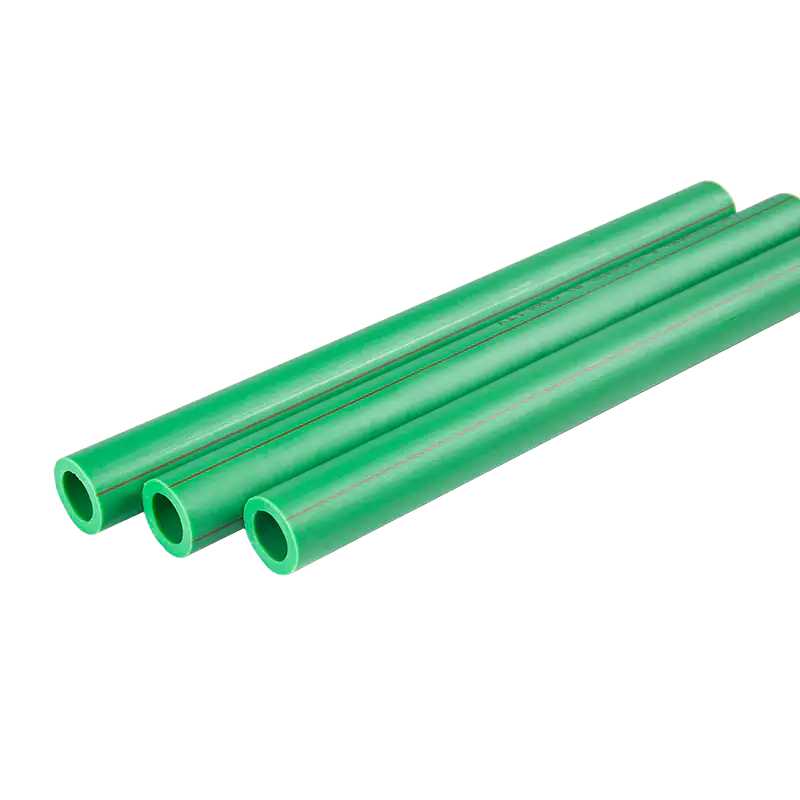
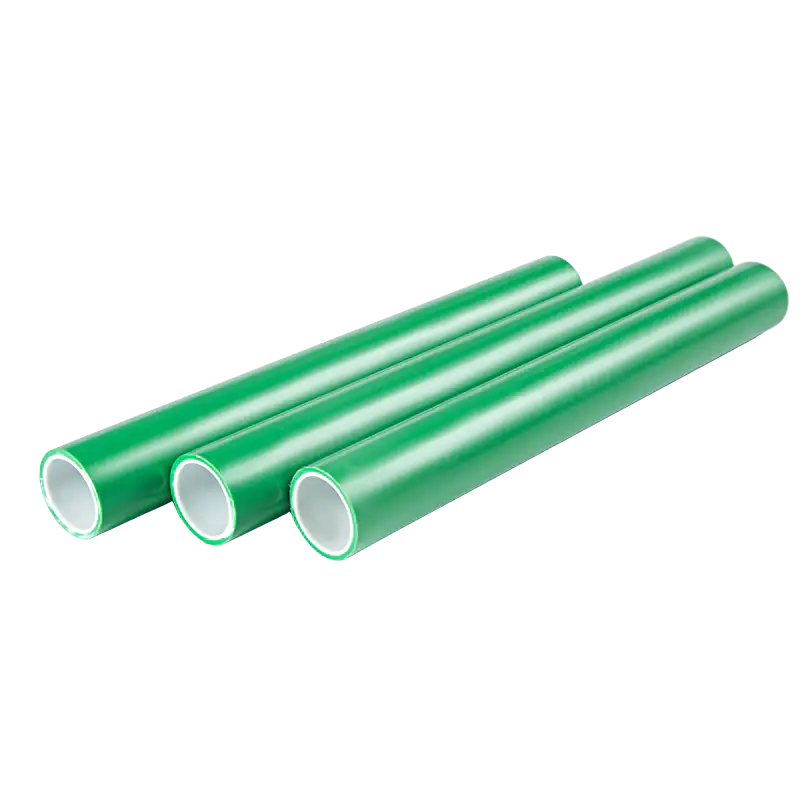
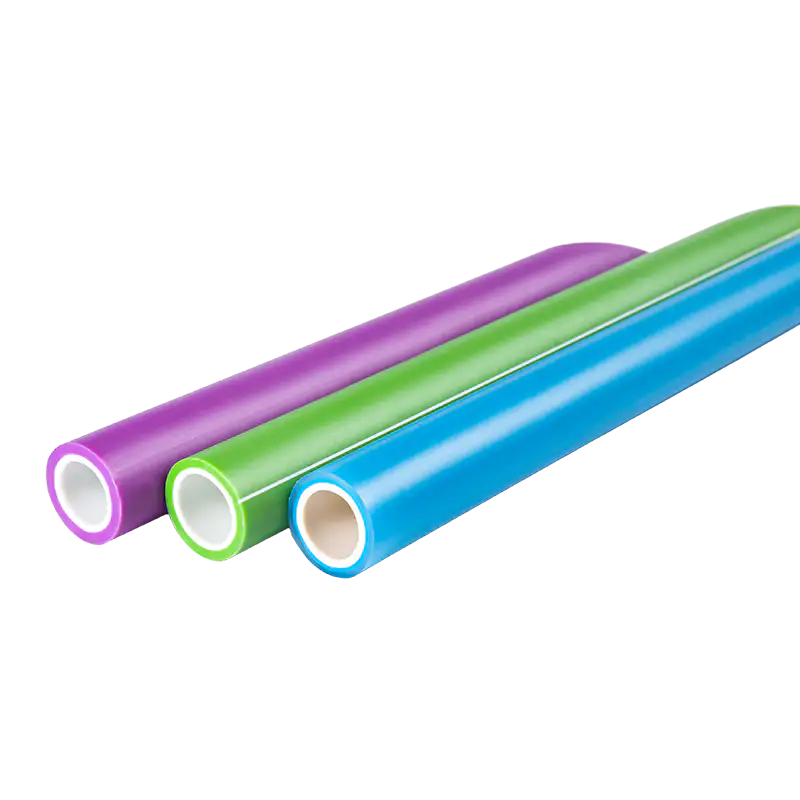
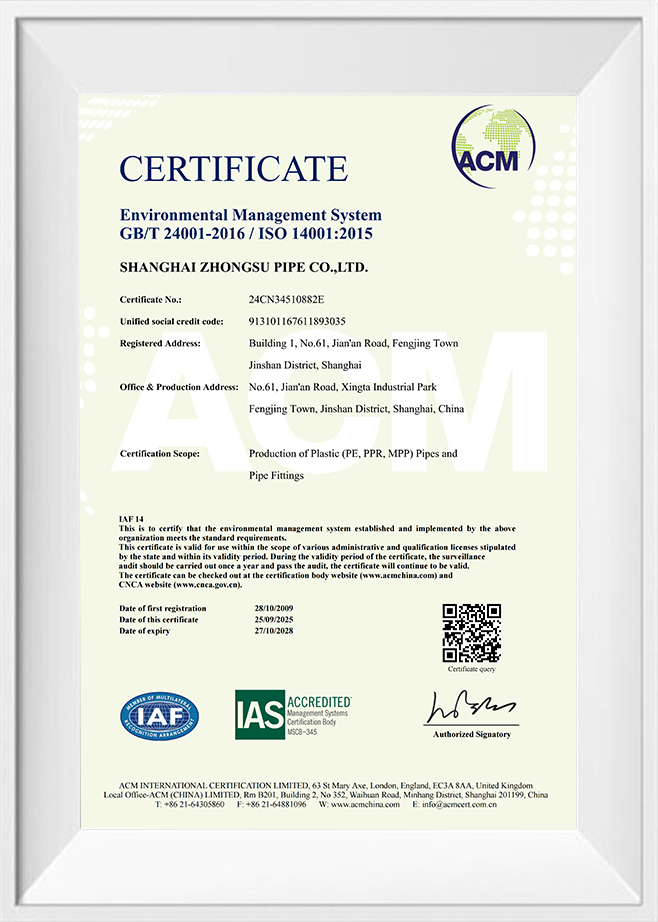
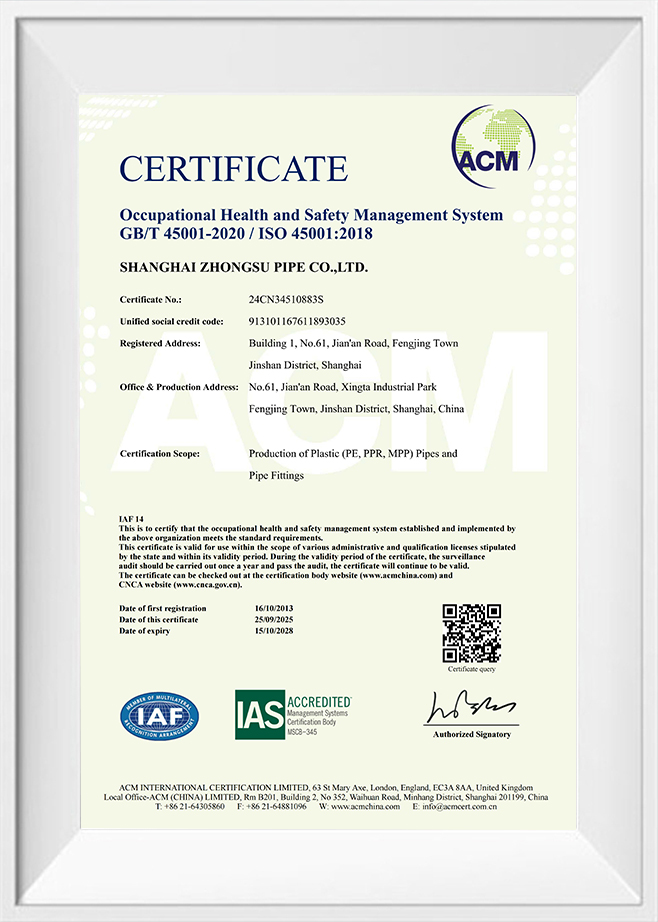
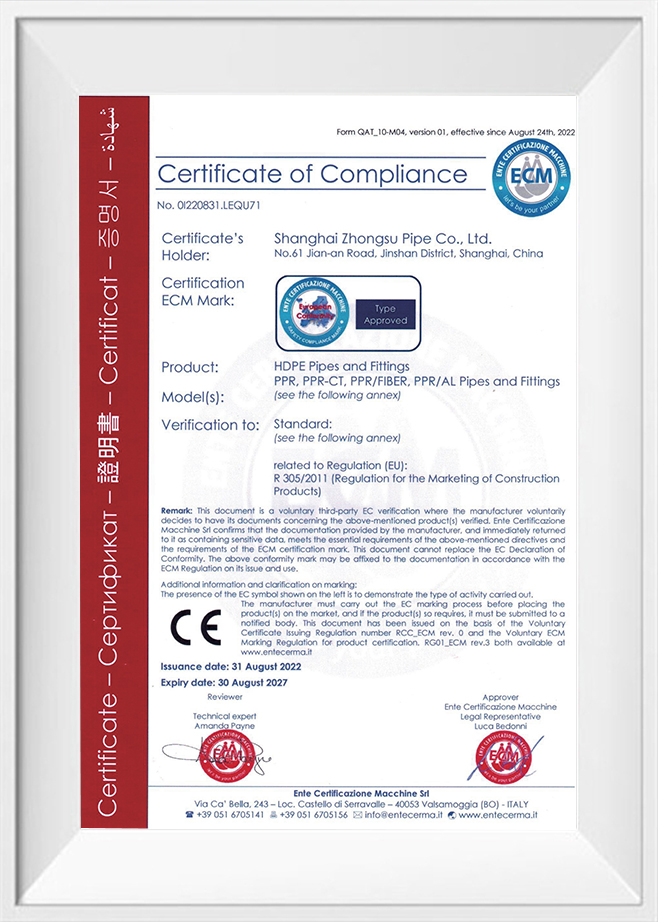
Shanghai Zhongsu Pipe Co., Ltd. manufactures PPR PIPE FOR WATER SUPPLY for potable hot and cold water systems. Our range covers single layer, double layer and antibacterial PPR pipe, supported by matching PPR FITTING for complete fusion-welded pipelines.
PPR Pipe for Water Supply: What We Manufacture
ZHSU produces polypropylene random copolymer pipe for potable water distribution in residential, commercial, institutional and municipal projects. The pipe is supplied in straight lengths with smooth inner walls, low thermal conductivity and corrosion resistance, making it suitable for concealed risers, horizontal distribution, plant rooms and buried service runs where metal pipe would scale or corrode.
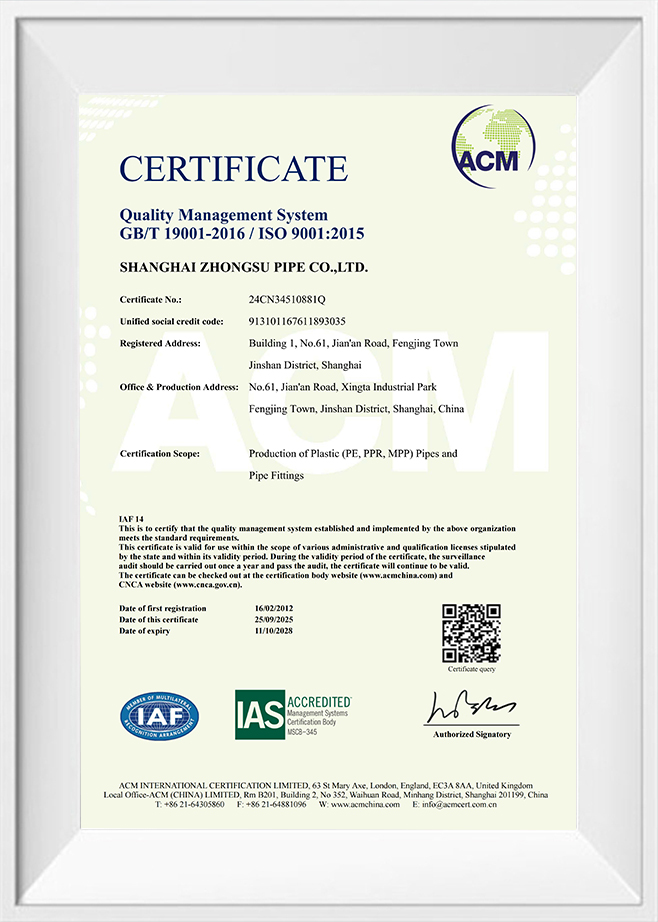
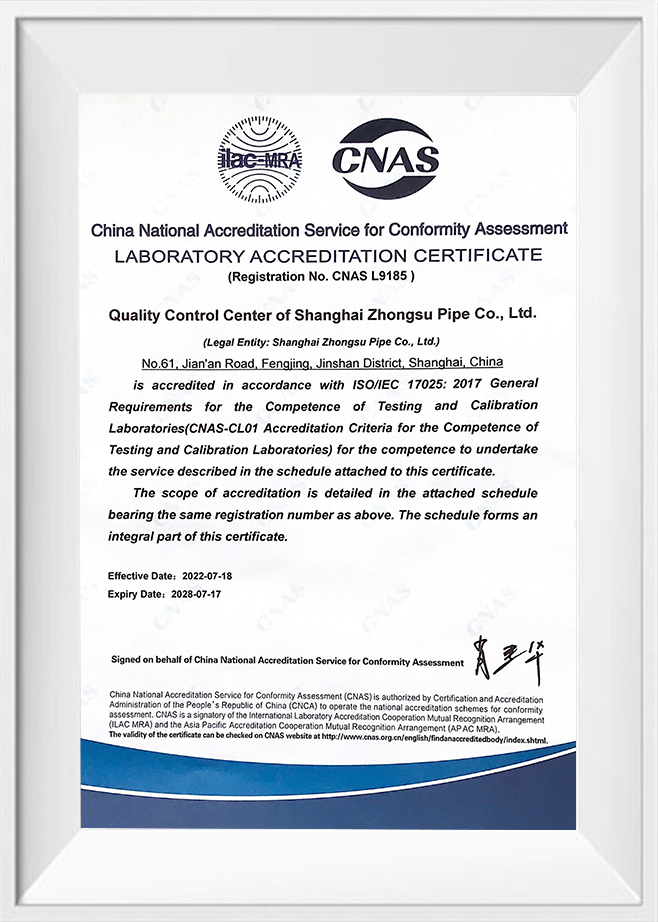
As one of China's established Potable Water PPR Pipe Manufacturers, our production is based in Jinshan District, Shanghai, with imported raw materials and a CNAS-certified national laboratory supporting batch testing. The water supply range is positioned as the core PPR pipe family, with fittings, valves and transition components supplied from the same material system to keep weld compatibility consistent across the project.
Our PPR Water Supply Range
Single Layer PPR Pipe
Standard monolithic wall for general potable water supply, domestic hot and cold lines, and projects where a uniform PPR cross-section is preferred.
Double Layer PPR Pipe
Two-layer construction for applications requiring an outer layer with light-blocking or UV-stabilised characteristics while retaining a hygienic inner water-contact surface.
Antibacterial PPR Pipe
For potable water systems where microbial control in the pipeline is specified, such as hospitals, food facilities and high-occupancy buildings.
Each pipe type is supported by our PPR FITTINGS range, including couplings, elbows, tees, unions and valves. As a full-range PPR hot and cold water pipe factory, we also cover higher-temperature service conditions: PPR PIPE FOR HIGH TEMPERATURE WATER is available as a separate selection path.
Application Fit and Material Considerations
PPR is selected for water supply because the material does not corrode, does not support galvanic reactions and maintains a smooth bore over time. For potable water, the wetted surfaces must remain free from contamination, and the pipe must tolerate the combined effect of temperature, pressure and service life.
- Domestic hot and cold water: risers, floor distribution, bathroom and kitchen groups, and plant room headers.
- Commercial and institutional buildings: hotels, hospitals, schools, offices and sports facilities with continuous demand profiles.
- Municipal and rural water networks: distribution mains and service connections where corrosion resistance and long service life are priorities.
- Industrial potable and process water: wash-down, utility and process lines compatible with polypropylene systems.
Material selection is based on the operating temperature, design pressure, flow requirement and installation environment. Where the pipe will be exposed to sunlight, UV-stabilised or double layer options are considered; where microbial control is specified, antibacterial PPR is used. The inner surface remains smooth to limit pressure loss, and the low thermal conductivity reduces heat gain or loss compared with metal pipe — a balance our potable water PPR pipe manufacturers team confirms against the project's working conditions before production.
Critical Specifications and Configuration Choices
We configure the water supply pipe around the project working point rather than a single catalogue size. The main variables are diameter, wall thickness or pressure class, pipe type, connection method and the fitting schedule required to complete the system.
| Configuration Item | Options We Supply | Project Input That Drives Selection |
|---|---|---|
| Pipe type | Single layer, double layer, antibacterial | Water quality requirement, UV exposure, microbial control specification |
| Diameter range | Small to large diameter PPR pipe | Flow rate, velocity limit, branch and riser sizing |
| Pressure class | Wall thickness matched to design pressure | System pressure, temperature, safety factor and service life |
| Connection | Fusion welding, threaded transitions | Installation method, equipment interface, maintenance access |
| Fittings | Couplings, elbows, tees, unions, valves | Layout drawings, branch schedule, valve and transition points |
| Packaging | Bundled pipe, cartoned fittings | Site storage conditions, handling method, delivery scope |
Capacity, Accuracy and Quality Control
Our production lines are set up for continuous pipe extrusion and fitting moulding, with dimensional control on diameter, wall thickness and ovality. Every batch is sampled and tested, and in-process inspections are carried out at regular intervals during production to check relevant data. The CNAS-certified laboratory supports material and product verification, and the quality inspection department performs checks at different stages from raw material to finished goods — the standard our customers expect from a dedicated PPR hot and cold water pipe factory.
Fusion-welded joints are the critical accuracy point in a PPR water supply system. We supply pipe and fittings from the same material system so that welding parameters remain consistent, and we provide guidance on heating time, insertion depth and cooling time for the selected diameter. This keeps joint quality predictable across site teams and reduces the risk of leaks at concealed connections.
Installation, Integration and Project Support
PPR pipe is installed by thermal fusion welding, which produces a homogeneous joint without gaskets or adhesives. The pipe can be routed through shafts, ceilings and buried trenches, and it can transition to threaded metal connections using threaded couplings and unions. Expansion and contraction are managed with fixed and sliding supports, and the layout should allow for thermal movement at changes of direction.
- Tooling: fusion welding machine, heating tools, pipe cutter, deburring tool and marking gauge matched to the pipe diameter.
- Utilities: stable power supply for welding equipment and clean working area for joint preparation.
- Operator safety: heat-resistant gloves, eye protection and adequate ventilation during welding.
- Acceptance: pressure test after installation, visual inspection of welds and dimensional verification against the approved schedule.
We support projects with material schedules, fitting lists and documentation for inspection. Where the design requires a specific pressure class, colour or marking, we confirm the configuration before production so that the delivered pipe matches the approved submittal.
Information We Use to Configure Your Solution
To prepare a suitable proposal, we need the project working conditions and the scope of supply. The following inputs allow us to select the pipe type, diameter, pressure class and fitting schedule without guesswork.
- Design temperature and pressure, including any intermittent peak conditions.
- Required flow rate or diameter schedule, with riser and branch sizes.
- Water quality or antibacterial requirement, and whether UV exposure applies.
- Pipe type preference: single layer, double layer or antibacterial.
- Fitting schedule, valve list and transition points to other materials.
- Project location, delivery terms and required documentation.
- Packaging, marking and any site-specific handling requirements.
Maintenance, Documentation and Delivery Scope
PPR water supply systems require little maintenance once commissioned. The main service tasks are periodic pressure checks, inspection of accessible joints and verification of valve operation. Because the material does not corrode or scale, the internal bore remains stable, and repairs can be made by cutting out a section and welding in a new pipe and fitting assembly.
We supply pipe and fittings as a coordinated package, with pipe bundled in woven bags and fittings packed in cartons. Documentation includes the factory inspection report and relevant quality records. For projects that require it, our PPR hot and cold water pipe factory provides material certificates and test data aligned with the approved specification.
Frequently Asked Questions
What is the difference between single layer, double layer and antibacterial PPR pipe?
Single layer pipe has a uniform PPR wall for general potable water supply. Double layer pipe adds an outer layer for light blocking or UV stabilisation while keeping a hygienic inner surface. Antibacterial PPR pipe is selected where the specification calls for microbial control in the pipeline.
Can ZHSU supply pipe and fittings for the same project?
Yes. As potable water PPR pipe manufacturers, we produce PPR pipe and a matching range of PPR fittings, including couplings, elbows, tees, unions and valves. Supplying both from the same material system keeps fusion welding consistent and simplifies the material schedule.
What information is needed for an accurate quotation?
We need the order list, pipe diameters and pressure class, fitting schedule, required pipe type, project location and trade terms. Design temperature and pressure help us confirm the correct wall thickness and product selection.
How is quality controlled during production?
Raw materials are sourced from established suppliers, production follows national and international standards, and every batch is sampled and tested. In-process inspections are carried out at regular intervals, and the CNAS-certified laboratory supports product verification.
Do you support OEM and ODM for PPR water supply pipe?
Yes. We support OEM and ODM arrangements, including agreed marking, packaging and documentation, subject to confirmation of the order scope and production schedule.
What is the typical delivery time?
Delivery time depends on the order list and the factory production schedule. We confirm the timeline when the order is placed and keep customers updated on production progress at regular intervals.