

 English
 Français
 русский
 Español
 Português
 عربى
عربى italiano
 Polskie
 Deutsch
 Nederlands


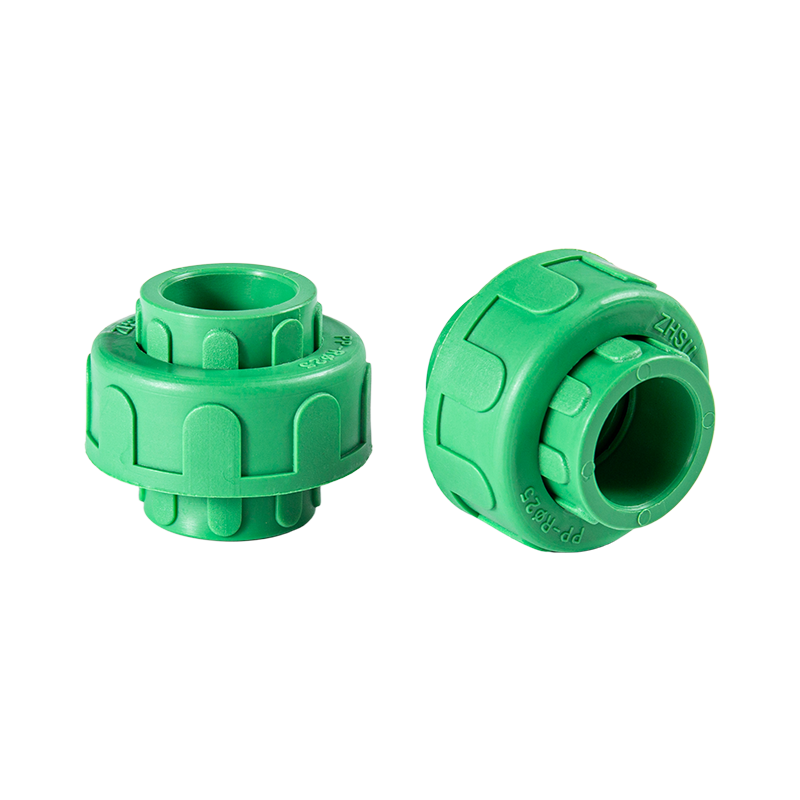
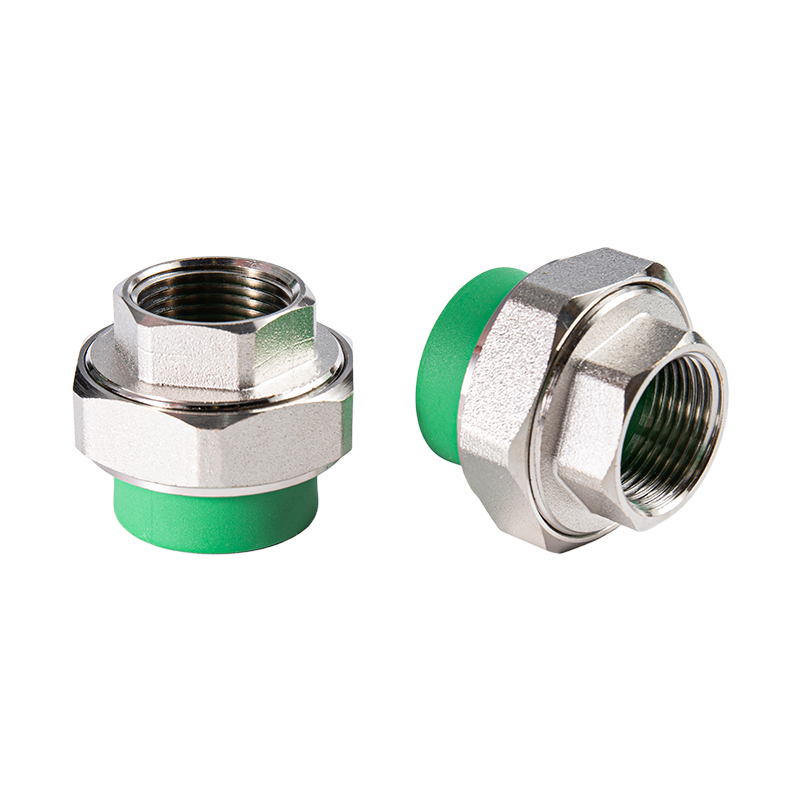
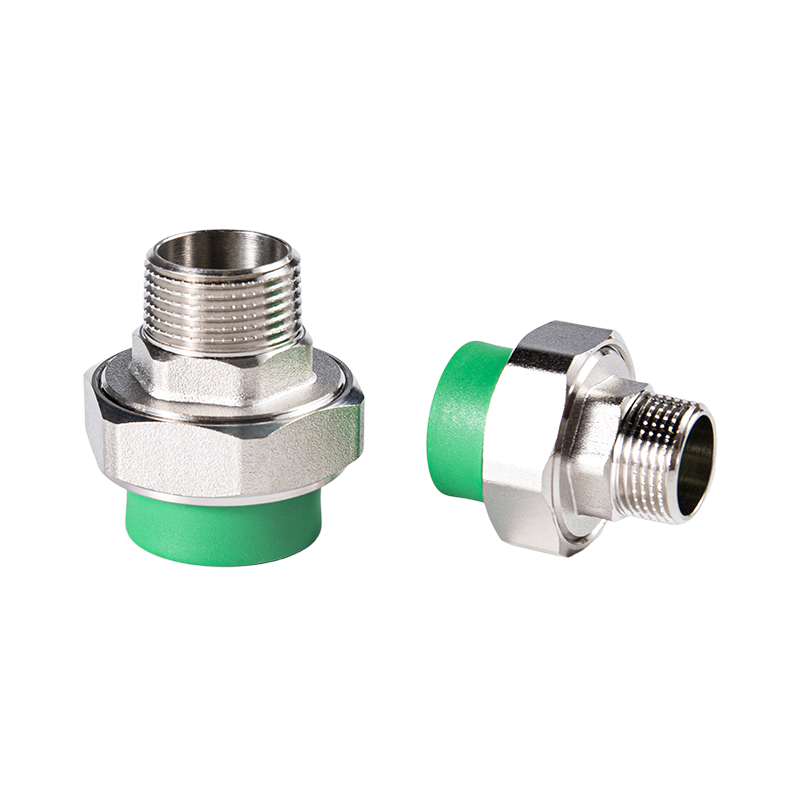
Shanghai Zhongsu Pipe Co., Ltd. is a leading PPR Union Manufacturers, producing PPR unions as part of a complete PP-R piping system made at our Jinshan District, Shanghai plant. A PPR union joins two pipe ends with a threaded nut and sealing arrangement, so a section of the line can be opened, serviced and reassembled without cutting pipe. We supply three union types — all-plastic, female threaded and male threaded — in 20mm, 25mm and 32mm sizes, with custom configurations produced to order.
Our union range is built for the points in a system that are opened most often: water meters, pumps, water heaters, valves, filters and equipment connections. Because the union body, nut and sealing face are moulded from the same polypropylene random copolymer used in our pipe, the joint keeps the thermal and chemical behaviour of the surrounding line.
PPR Union Range We Manufacture
Each union type solves a different interface problem. The all-plastic version keeps the whole joint in PP-R, which suits buried and concealed runs where no metal contact is wanted. Threaded versions transition from PP-R pipe to a metal thread, which is how most pumps, meters and tanks are connected.
| Union Type | Connection | Typical Application |
|---|---|---|
| PPR Plastic Union | Socket fusion both ends | Concealed and buried water supply runs, riser sections, manifold take-offs |
| PPR Female Threaded Union | Fusion socket + female BSP/NPT thread | Pump outlets, water meters, tank inlets, valve connections |
| PPR Male Threaded Union | Fusion socket + male BSP/NPT thread | Equipment inlets, filter housings, booster sets, threaded valve ports |
Sizes run from 20mm through 32mm as standard, matching the small and medium diameters used in building water supply, hot water and heating distribution. Larger or non-standard combinations are produced as custom items against a confirmed drawing or sample.
Where PPR Unions Fit in a Piping System
A union is a service point, not a general joint. We position it wherever the line will be opened during its working life, and we keep fusion joints for the permanent connections. That split keeps maintenance work local instead of forcing a section of pipe to be cut out.
- Metering and control points: water meters, pressure gauges and instrument tappings that need periodic removal.
- Pump and equipment connections: booster pumps, circulators, heat exchangers and filter housings where the union allows quick isolation.
- Hot water and heating circuits: PP-RCT and high-temperature pipe runs where thermal movement and repeated service access both matter.
- Riser and manifold take-offs: branch lines that may be extended or re-routed after handover.
- Prefabricated assemblies: skids and plant-room modules that are assembled off site and joined on site.
The union pairs with our PPR COUPLING range for straight permanent joints, and with PPR ELBOW and PPR TEE fittings to complete a route change or branch at the same node.
Material and Construction
As an experienced PPR Pipe Union Factory, we use imported raw material for our plastic products, and the PP-R compound is the same grade family used across our pipe and fitting production. That consistency matters at a union, because the body, nut and pipe all expand and contract at the same rate under temperature change.
- Body and nut: moulded PP-R, with the sealing face formed in the same moulding cycle for concentricity.
- Threaded inserts: metal thread bonded into the moulded body on female and male versions, sized to the matching pipe diameter.
- Sealing: flat gasket or O-ring seat depending on the union design, compressed by the union nut.
- Fusion sockets: dimensioned for standard socket fusion tooling so the installer's existing heating and welding equipment works without adapters.
Because the union is a demountable joint, the sealing element is the part that sees wear. We supply replacement seals and union nuts as spares so a service point can be restored without replacing the whole fitting.
Sizes, Threads and Configuration Options
Configuration is set by the pipe diameter on the fusion side and the thread standard on the equipment side. We confirm both before production, since a union that matches the pipe but not the pump port is a site problem.
| Configuration Item | Options We Produce |
|---|---|
| Nominal pipe size | 20mm, 25mm, 32mm standard; custom sizes to drawing |
| Union type | Plastic, female threaded, male threaded |
| Thread standard | Confirmed per project; metric and inch thread options |
| Colour | Standard PP-R colours; project colour on request |
| Branding | OEM and ODM supported |
Unions are supplied to match the pipe system they serve. For hot water and heating circuits we recommend pairing them with PPR PIPE FOR HIGH TEMPERATURE WATER, and for cold and general potable supply with the water supply pipe range.
Installation, Commissioning and Acceptance
A union is installed in two stages: the fusion sockets are welded to the pipe ends, then the union nut is tightened to compress the seal. The second stage is where most leaks originate, so we document the tightening approach with the order.
- Cut and square the pipe ends, mark the fusion depth, and heat socket and pipe to the temperature and time set by the pipe diameter.
- Join without twisting, hold until set, and let the joint cool fully before any mechanical load is applied.
- Align the two halves concentrically, fit the seal, and hand-tighten the union nut, then finish with the specified spanner allowance.
- Pressure-test the completed section before concealment or insulation, and record the test on the commissioning sheet.
Threaded unions need a thread sealant compatible with potable water where the line is for drinking supply. We confirm the thread engagement depth so the metal insert is not over-stressed during tightening.
Quality Control and Documentation
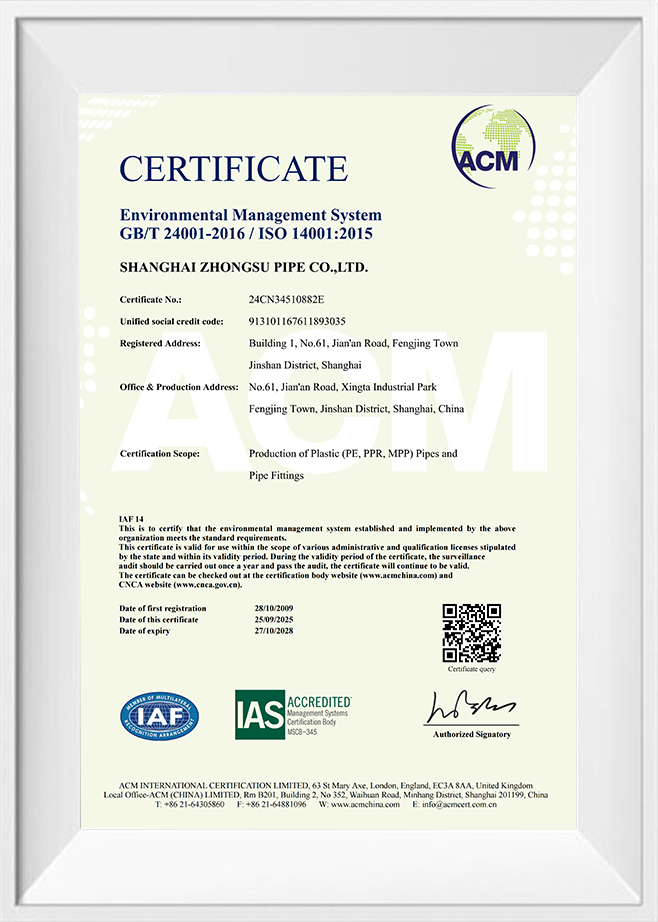
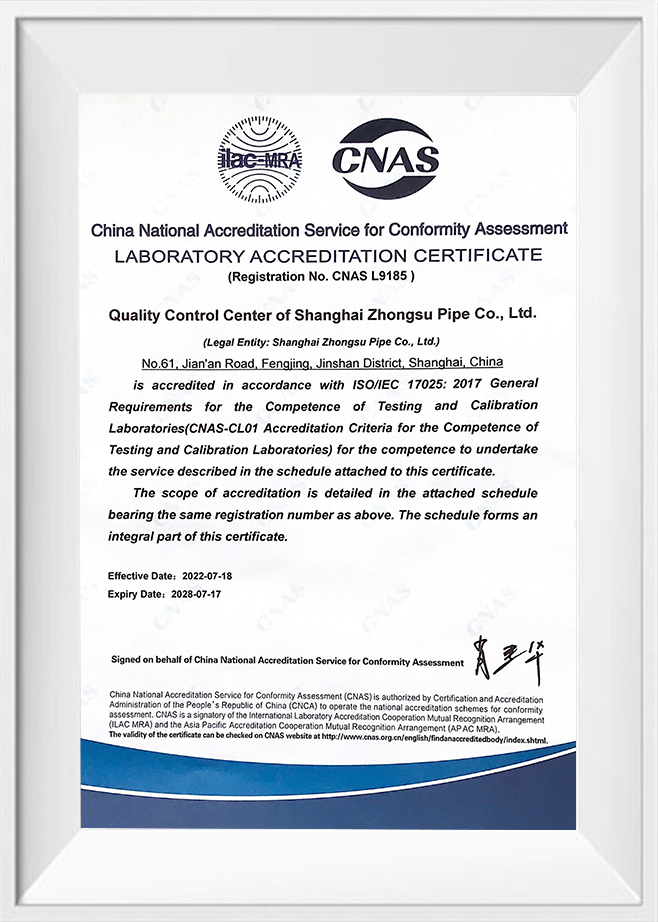
Production runs under full-process monitoring from raw material intake to finished goods, with in-process inspection at fixed intervals and sampling tests on each batch. Our CNAS-accredited laboratory carries out the material and dimensional checks, and the quality department performs additional checks at set time intervals.
- Dimensional and thread checks on union bodies, nuts and inserts.
- Batch sampling tests with records retained against the production lot.
- Factory inspection report issued as quality assurance documentation with the shipment.
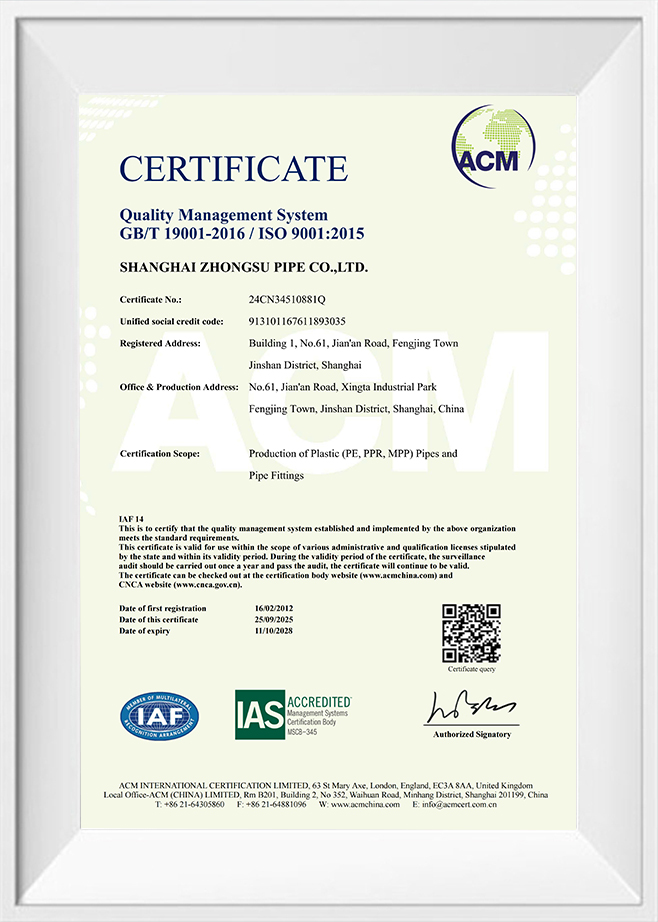
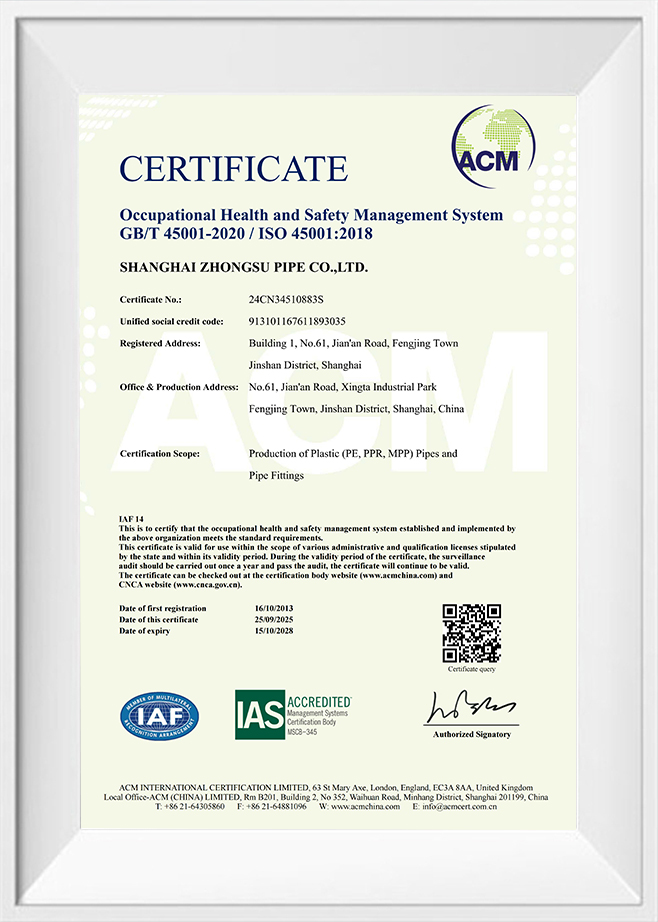
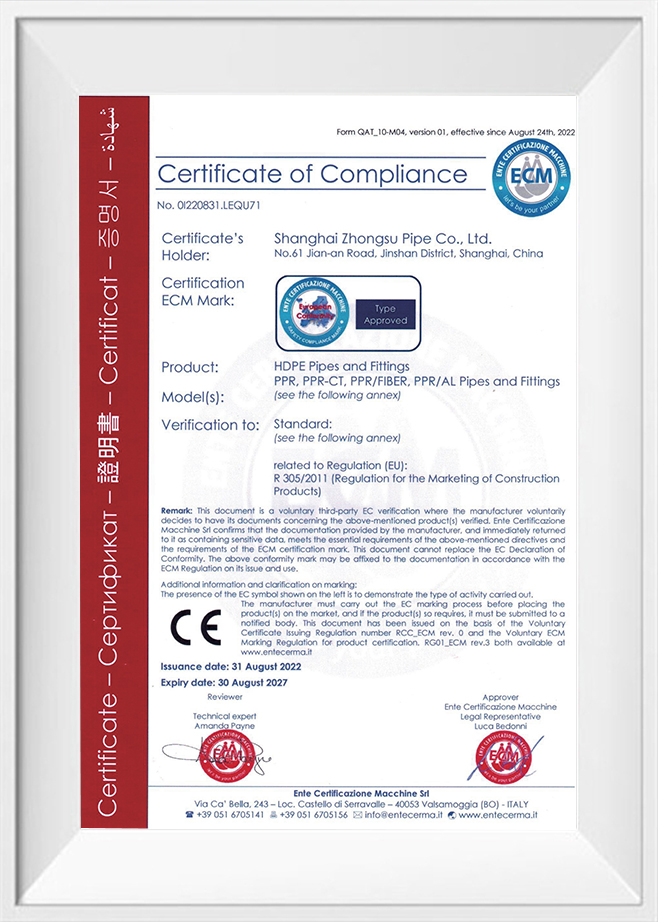
- Management system certification covering quality, environment and occupational health and safety, with CE certification for applicable products.
Documentation packs are prepared per order, and we can align the inspection scope with the project's acceptance requirements when those are stated at the quotation stage.
Packing, Delivery and Spares
Fittings are packed in transparent plastic bags in counted quantities, then placed in dedicated fitting cartons. That packing keeps small union components together and protects the threads and sealing faces in transit. Pipes are bundled and packed in woven bags.
Standard delivery is around 15 days, with the actual schedule confirmed against the order list and current production loading. Regular fittings are held in stock, so small and repeat orders can be handled without a minimum quantity. Spare seals and union nuts are available for maintenance stock, and we can supply the same union type across repeat phases of a project.
Information We Use to Configure Your Solution
A union quotation is straightforward once the interface is fixed. We work from the order list and the trade terms you require, and we confirm the technical points below before releasing production.
| Project Input | Why We Need It |
|---|---|
| Pipe diameter and union type | Sets the fusion socket size and whether a thread is required |
| Thread standard and gender | Matches the pump, meter or valve port on site |
| Medium, temperature and pressure | Confirms material grade and seal selection |
| Quantity by size and colour | Drives the packing list and carton count |
| Trade terms and destination | Used to quote FOB, CIF, CNF or other agreed terms |
| Branding and marking requirements | Applies OEM or ODM marking to the order |
Send the order list and the trade terms for quotation, and we will confirm the configuration, packing and delivery schedule in return.
PPR Union Questions from Project Teams
Which union type should be used at a pump connection?
A threaded union is normally the right choice, because pump ports are threaded. Use the female threaded union where the pump port is male, and the male threaded union where the port is female. The fusion side welds to the PP-R pipe, so the transition from plastic pipe to metal equipment happens inside the union rather than at a separate adapter.
Can a PPR union be used on hot water lines?
Yes. The union is moulded from the same PP-R material family as the pipe, so it follows the temperature rating of the line it is installed in. For continuously high-temperature service we pair the union with PP-RCT or high-temperature pipe so the whole assembly shares the same design basis.
What sizes are available, and can non-standard sizes be produced?
Standard production covers 20mm, 25mm and 32mm unions in plastic, female threaded and male threaded versions. Custom items are produced to a confirmed drawing or sample, including project-specific thread standards and colour requirements.
How is the union sealed, and are replacement seals available?
The union nut compresses a gasket or O-ring against the sealing face of the body. Because that element is the wearing part in a demountable joint, we supply replacement seals and union nuts so a service point can be restored without cutting out the fitting.
What documentation is supplied with a union order?
Orders are shipped with a factory inspection report, and batch sampling records are retained against the production lot. Where a project requires a defined inspection scope or additional acceptance documentation, we confirm that scope when the order is placed.
Do you support OEM and ODM for PPR unions?
Yes. We produce unions under customer branding and develop custom configurations to drawing. Marking, colour and packing can be aligned with the distributor's or project's requirements, and the same specification can be repeated across later phases of the same project.