
 English
 Français
 русский
 Español
 Português
 عربى
 italiano
 Polskie
 Deutsch
 Nederlands

Is PVC Recyclable? What Happens to It and How to Dispose of It Properly
Content
Flip over a plastic fitting or a length of conduit and you may find a small triangle with the number 3 inside. That number means polyvinyl chloride, better known as PVC, and it almost always prompts the same question from the people who call our sales desk: is PVC recyclable? The short answer is yes, technically. The fuller answer explains why so little of it actually gets recycled, and what that means when you are choosing materials for a building or a water network.
Is PVC Recyclable? The Short Answer
PVC is a thermoplastic. Like polyethylene and polypropylene, it softens when heated and can be melted, reground and moulded into a new shape without a chemical change. Mechanical recycling of PVC is a real industrial process and has been for decades. Most of it happens inside factories, where trim, offcuts and rejected parts are ground up and fed straight back into the same production line.
So the material is recyclable. The bottleneck is the collection system, not the chemistry. Three things are true at once:
- PVC carries the resin code 3, but that symbol says what the plastic is made of, not whether your local programme will accept it.
- Post-consumer PVC is accepted in very few kerbside schemes, and many waste guides place it in the "rarely accepted" column, or exclude it outright.
- Industrial PVC scrap is regularly recycled in closed loops, because the manufacturer knows exactly what is in it and where it came from.
That gap between factory scrap and household waste is the heart of the story.
Why PVC Recycling Is Harder Than It Looks
The chlorine factor
Rigid PVC is roughly 57% chlorine by weight, which is what makes it flame-retardant, chemically resistant and inexpensive to produce. It is also what makes reprocessing fussy. PVC has a narrow processing window: heat it too far and it begins to release hydrogen chloride, which attacks equipment and degrades the polymer. Recyclers manage this with dedicated lines, temperature control and stabiliser packages, but those lines cost money and not every plant wants to run them.
Formulations vary enormously
A rigid drainage pipe, a flexible garden hose and a window profile may all be "PVC", yet contain very different plasticisers, fillers, impact modifiers and stabilisers. Older products in some regions can contain heavy-metal stabilisers that were phased out later. A recycler receiving a mixed load cannot easily know what it is dealing with, so output quality drops and the material gets downcycled or rejected.
Volume and economics
Recycling runs on volume and value. PVC waste is bulky, relatively low in scrap value and expensive to transport. Collection schemes concentrate on the resins with reliable end markets, such as PET bottles and HDPE containers. When a kerbside programme decides what to accept, PVC rarely makes the cut.
What Actually Happens to Recycled PVC
Where recycling does happen, the pathways are fairly well defined. Clean, single-source PVC scrap is ground into flakes or regrind and reused within the same product family: pipe offcuts back into pipe, profile trim back into profiles. Post-consumer material that is still sorted well enough tends to be downcycled into flooring, panelling, conduit, hose cores and similar products where colour and exact formulation matter less.
Industry-led voluntary programmes, particularly in Europe, have pushed PVC collection volumes up over the past two decades. The direction of travel is positive, but the tonnages remain modest next to global PVC production, and most of the growth sits in commercial and industrial streams rather than household bins.
| Resin code | Plastic | Typical kerbside acceptance | Common recycled use |
|---|---|---|---|
| 3 | PVC (polyvinyl chloride) | Rarely | Flooring, panelling, conduit, hose |
| 5 | PP (polypropylene, incl. PP-R) | Sometimes | Automotive parts, crates, pipe regrind |
| 2 | HDPE (high-density polyethylene) | Widely | New pipe, bottles, drainage products |
| 1 | PET | Widely | Fibre, sheet, new bottles |
How to Dispose of PVC Properly
If you are holding a length of old PVC pipe or a bag of fittings, this is the sequence we recommend:
- Check your local authority's rules first. Most kerbside programmes exclude PVC, but some construction-waste schemes accept it separately.
- Separate rigid from flexible PVC. Rigid pipe and profile are far easier to recycle than plasticised hose or cable sheathing.
- Clean it. Soil, cement residue and adhesive contamination are the fastest way to get a load rejected.
- Take it to a specialist recycler or a builder's take-back point rather than the general bin.
- Never burn it. Combustion of PVC releases acidic gases and is regulated for good reason.
What This Means When You Are Choosing Pipe Material
This is where the conversation usually turns practical. If end-of-life handling matters for your project, and on public and green-building work it increasingly does, the resin family you choose decides how many options you will have in thirty years' time.
Polypropylene random copolymer, the PP-R we have been extruding since 2004, and high-density polyethylene both belong to the polyolefin family. They contain no chlorine, they tolerate repeated melting, and their scrap has established end markets. Offcuts from a PP-R installation can be reground, and HDPE pipe is one of the few construction plastics with a genuinely mature recycling chain behind it. Neither is perfect, but both sit in a far friendlier position than PVC when a building is stripped out.
If you are comparing systems for a water supply or drainage project, it is worth looking through the PP-R pipe range alongside our HDPE options. For larger transmission work, our article on HDPE pipes for multi-scenario water transmission covers where each material performs best.
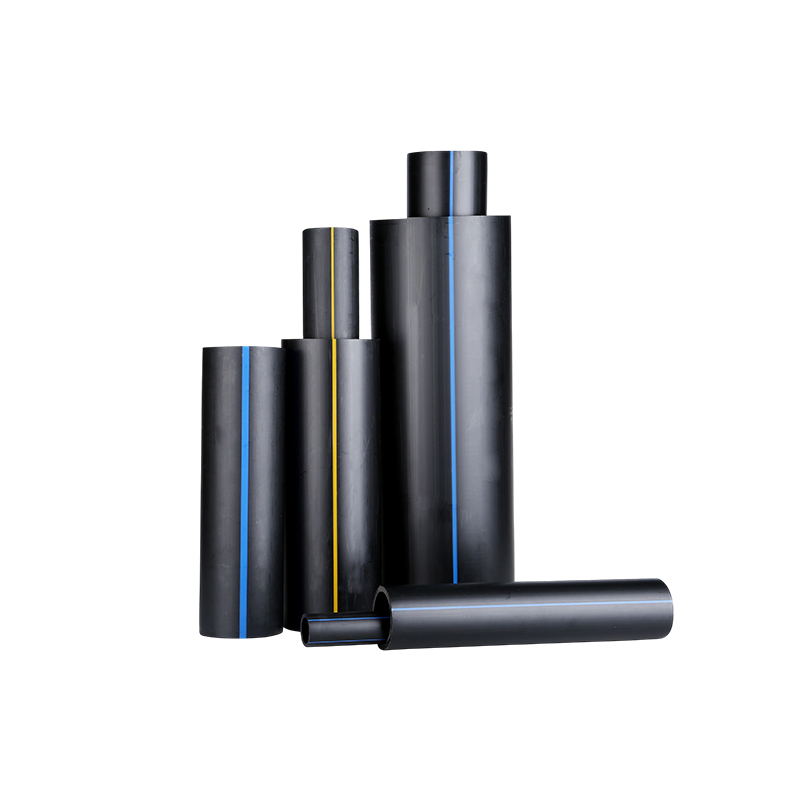 HDPE Pipe for Water Supply and TransmissionCompare this PE100 HDPE option for municipal water and drainage projects, with diameters to 1200 mm and fusion-jointed construction.View Product →
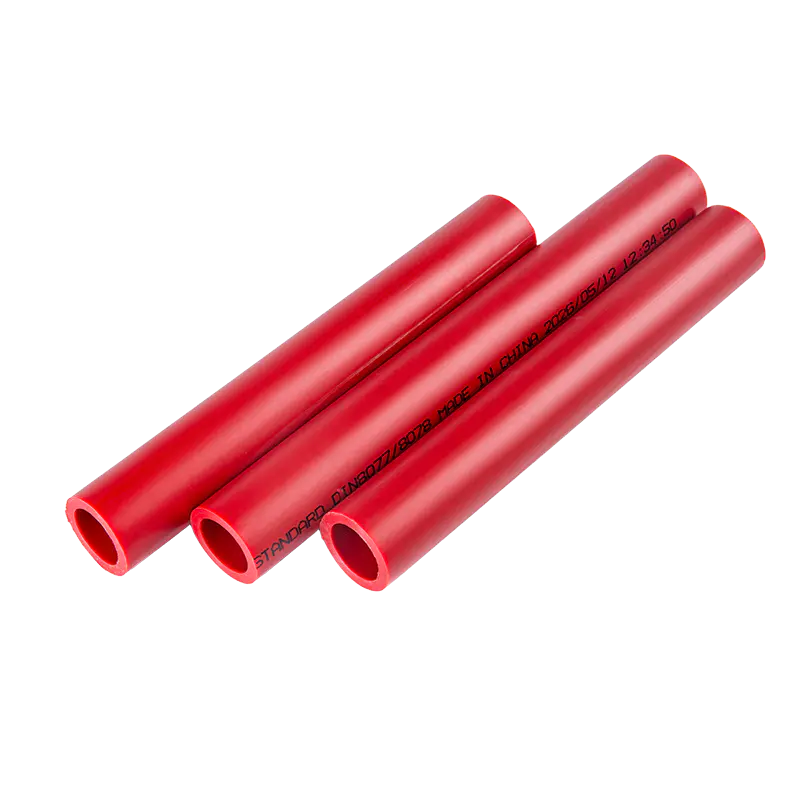 Single Layer PPR Pipe for Plumbing and HeatingReview this single-layer PPR option for hot and cold water, heating and irrigation, with fusion joints and sizes up to 160 mm.View Product →
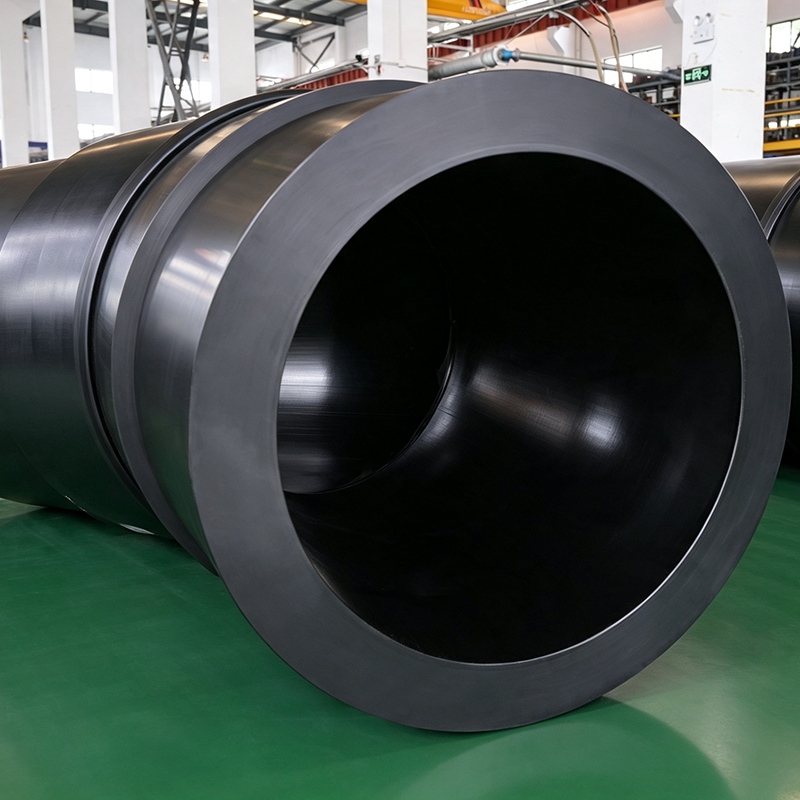 High Pressure HDPE Pipe for Nuclear and MiningConsider this high-pressure PE100 pipe for demanding nuclear and mining systems, with PN25/SDR7.3 ratings, fusion joints and diameters up to 1200 mm.View Product →
One note from our own laboratory work: recycled content and recyclability are two different claims. A pipe can be made partly from regrind and still be fully recyclable at end of life; a pipe can be made from virgin resin and be impossible to recycle. It is worth asking suppliers which one they mean.
Questions We Hear Most Often
Can PVC pipes be recycled?
Yes. Clean, identified PVC pipe offcuts are routinely reground and reused, especially by the manufacturers who generated them. Mixed, dirty or weathered pipe is much harder to place.
Can I put PVC in my recycling bin?
Almost certainly not. Very few kerbside programmes accept resin code 3, and putting it in the bin can contaminate a load that would otherwise have been sold.
Does the number 3 mean it is recyclable?
No. The resin code identifies the material; it does not guarantee that a recycling route exists in your area. This is one of the most persistent misunderstandings in plastics recycling.
Is recycled PVC safe to use?
That depends on the source and the standard it is tested against. Drinking-water applications require traceable material and specific approvals, which is one reason recycled PVC tends to end up in flooring, conduit and profiles rather than potable water pipe.
Which is easier to recycle: PVC, PP-R or HDPE?
HDPE is easiest in practice, thanks to a large existing recycling infrastructure. PP-R is close behind, particularly as industrial regrind. PVC is the most constrained, mainly because of collection and sorting rather than any fundamental impossibility.
So, is PVC recyclable? Yes, and that answer is worth knowing, because the material is not the villain of the story. The bottleneck is a collection and sorting system built around bottles and containers, plus a formulation that demands care at the reprocessing stage. For a household, that means keeping PVC out of the kerbside bin and using a specialist route. For a specifier, it means thinking about end of life at the moment you choose the pipe, which is exactly when that decision is still cheap to change.

-
 No. 61, Jian-an Road, Xingta Industrial Park, Jinshan District, Shanghai, China.
-
 judy@zhsu.com
-
 +86-15728041804
Copyright © Shanghai Zhongsu Pipe Co., Ltd. All rights reserved. PPR Pipe and PPR Fittings Solutions PPR Piping Manufacturer in China
