
 English
 Français
 русский
 Español
 Português
 عربى
 italiano
 Polskie
 Deutsch
 Nederlands

Fire Safe and Corrosion Resistant Pipe Systems: A Practical Material Guide
Content
- 1 What Fire Safe and Corrosion Resistant Really Mean
- 2 Where Corrosion Quietly Shortens a System's Life
- 3 Comparing the Materials Used in Water-Based Fire Protection
- 4 HDPE Pipe for Buried Fire Water Mains and Hydrant Networks
- 5 PP-RCT Pipes for High-Temperature Lines and Risers
- 6 Fittings, Valves and Joints: Small Parts, Large Consequences
- 7 Raw Material, Testing and Delivery
- 8 A Practical Checklist Before You Specify
- 9 Let's Talk About Your Project
A fire protection system is built around one promise: when the call comes, the water arrives. Pump curves, riser diameters and sprinkler spacing all matter, but nothing matters as much as the condition of the pipe that has to carry that water five, ten or twenty years after commissioning. In our years of supplying plastic pipe and fittings to building and municipal projects, the networks that stay dependable are almost always the ones where corrosion resistance was written into the specification from the start, instead of being treated as a maintenance problem for later.
This guide is written for engineers, contractors and facility teams comparing pipe systems for fire-safe, corrosion-resistant duty. We make pipe rather than write codes, so we have kept the discussion close to what we know well: how material choice shapes flow, joints, heat tolerance and service life in real installations.
What Fire Safe and Corrosion Resistant Really Mean
The two phrases describe different properties, and it helps to separate them before comparing materials.
Fire safety is mostly about water arriving
A pipe is rarely asked to withstand direct flame for long. It is asked to hold its integrity and its internal diameter so that design flow reaches the most remote sprinkler or hydrant. Heat tolerance still matters where lines pass through hot plant rooms or serve hot water supply, and there the material grade, not just the material family, decides whether the line stays inside its pressure rating.
Corrosion resistance is a hydraulic property
Corrosion is often described in terms of leaks, but its first effect is on flow. Internal tuberculation, scale and biofilm narrow the bore and roughen the wall, so friction losses rise and the pump works against a system that no longer matches the original calculation. A corrosion-resistant pipe is therefore one that keeps its bore, its roughness and its pressure class for the whole design life, without linings, inhibitors or cathodic protection to maintain.
Where Corrosion Quietly Shortens a System's Life
Failures rarely announce themselves. In water-based systems the same weak points keep appearing:
- Internal tuberculation in steel, where oxide deposits build on the wall, reducing the effective diameter and lowering the flow coefficient of the line.
- Threaded and welded joints, where cut threads strip the protective layer and create crevices in which pitting begins.
- Dissimilar metal contact, where a steel fitting on a copper line, or a galvanized component downstream of bare steel, sets up a galvanic cell that consumes the less noble metal.
- Soil-side attack on buried mains, where coating damage during backfill is enough to start external corrosion that no one inspects again.
- Sediment and biofilm, where slow-moving water in dead legs and hydrant branches shelters bacteria and accelerates under-deposit corrosion.
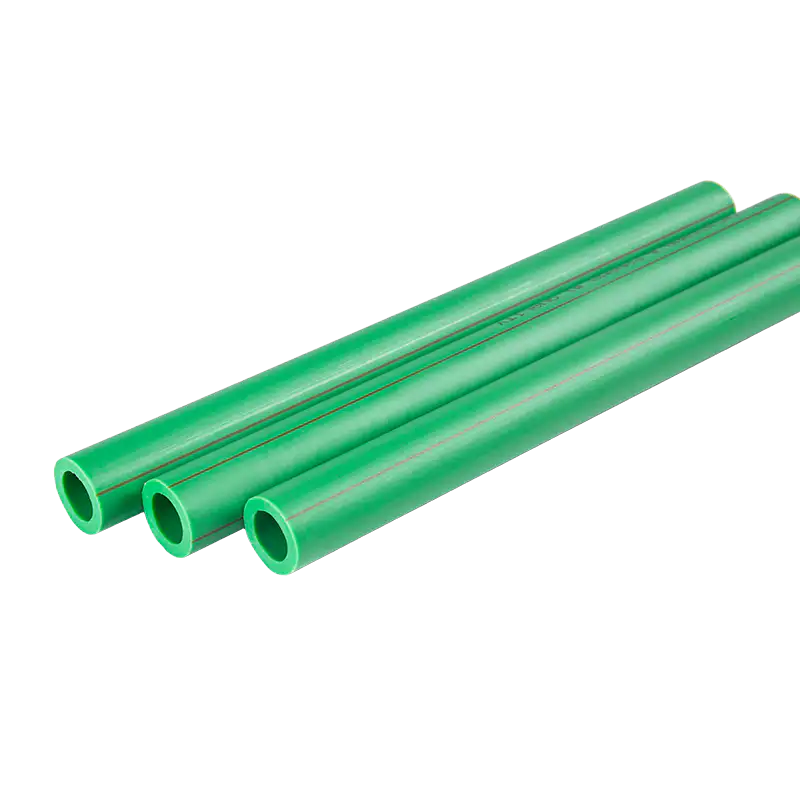
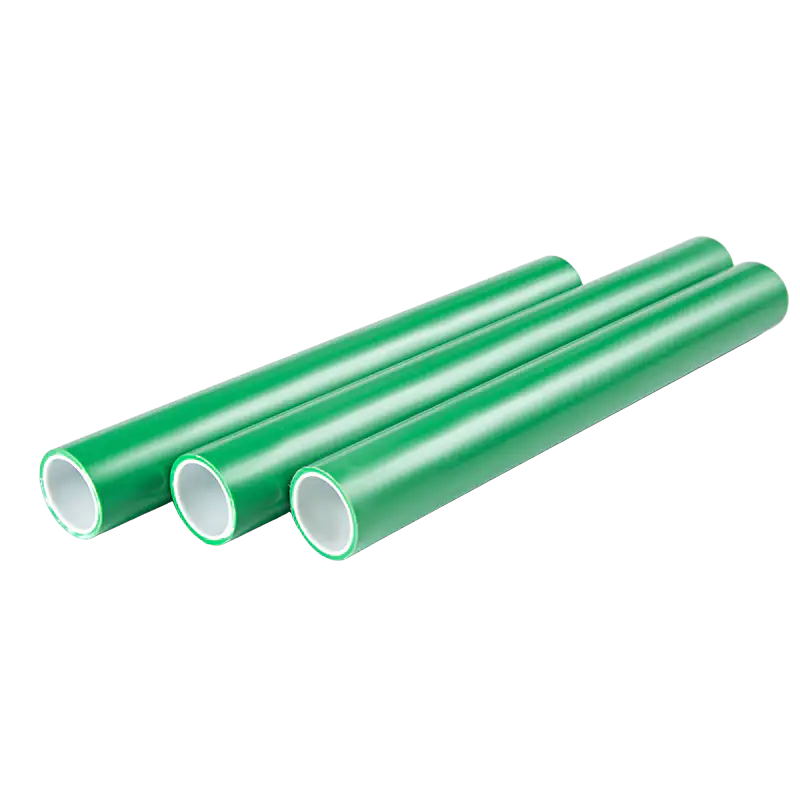
Corrosion resistance is also a water-quality question. On the potable side of a combined building, the same riser often feeds domestic outlets, and deposits or bacterial growth there are as unwelcome as they are in the fire main. That is one reason we produce an antibacterial PP-R pipe for supply lines, using a formulation that limits bacterial proliferation on the inner wall while keeping the bore smooth.
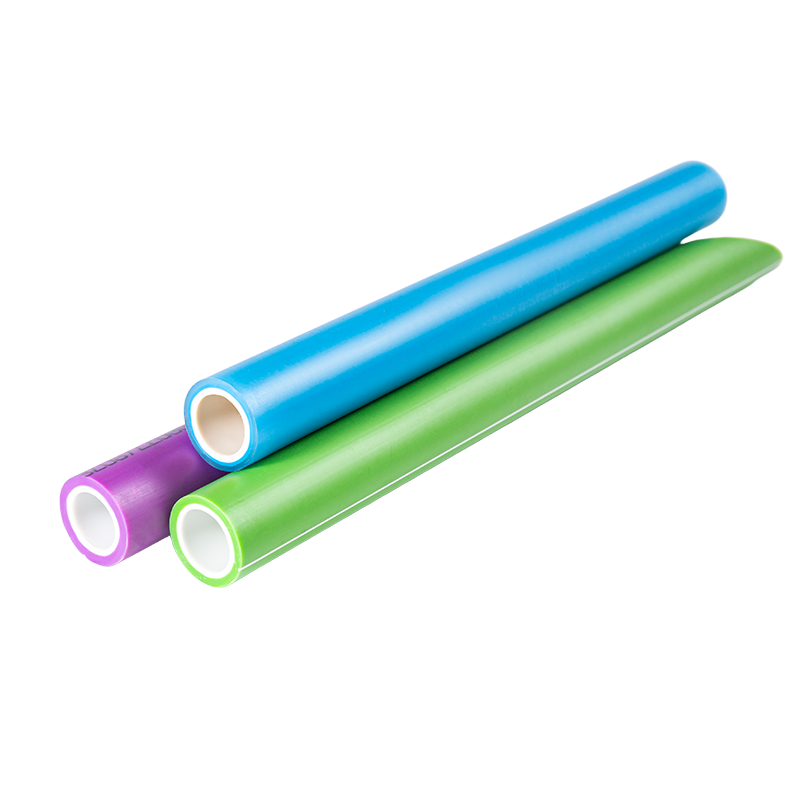 Antibacterial PPR Pipe for Potable Water SupplySilver-ion infused PP-R pipe with double-layer construction for cleaner hot and cold potable water lines in hygiene-sensitive buildings.View Product →
Comparing the Materials Used in Water-Based Fire Protection
Most specifications come down to a short list of candidates. The table below sets out how each one behaves once water, time and temperature are involved.
| Material | Corrosion behaviour | Heat performance | Typical role |
|---|---|---|---|
| Black steel (Schedule 10 or 40) | Corrodes internally and externally; needs dry or chemically treated systems | Excellent heat tolerance and mechanical strength | Exposed sprinkler branch lines in industrial buildings |
| Galvanized steel | Zinc layer slows internal corrosion; cut ends and threads stay exposed | Good heat tolerance | Wet systems where a zinc layer is accepted |
| Copper | Naturally resistant in most waters; pitting possible in aggressive water or at flux residue | Good heat tolerance | Small-diameter supply and specialist systems |
| CPVC | Chemically inert in most waters; no scale or tuberculation | Listed for light-hazard sprinkler service within its temperature ceiling | Light-hazard sprinkler piping and retrofit work |
| HDPE | Not subject to electrochemical corrosion; no lining or cathodic protection | Rated for cold and warm water within its pressure and temperature envelope | Buried fire water mains, hydrant and yard networks |
| PPR and PP-RCT | Non-corroding, smooth bore, no scale build-up | PP-RCT tolerates higher temperatures and pressures than standard PP-R | Hot water supply, risers and building service lines |
HDPE Pipe for Buried Fire Water Mains and Hydrant Networks
Buried mains are where corrosion does its most expensive work, because every repair means excavation. Steel mains answer the problem with coatings, wraps and cathodic protection, three systems that all have to survive backfill and remain intact for decades. HDPE takes a different route: polyethylene does not corrode electrochemically, so there is no lining to damage and no anode to replace.
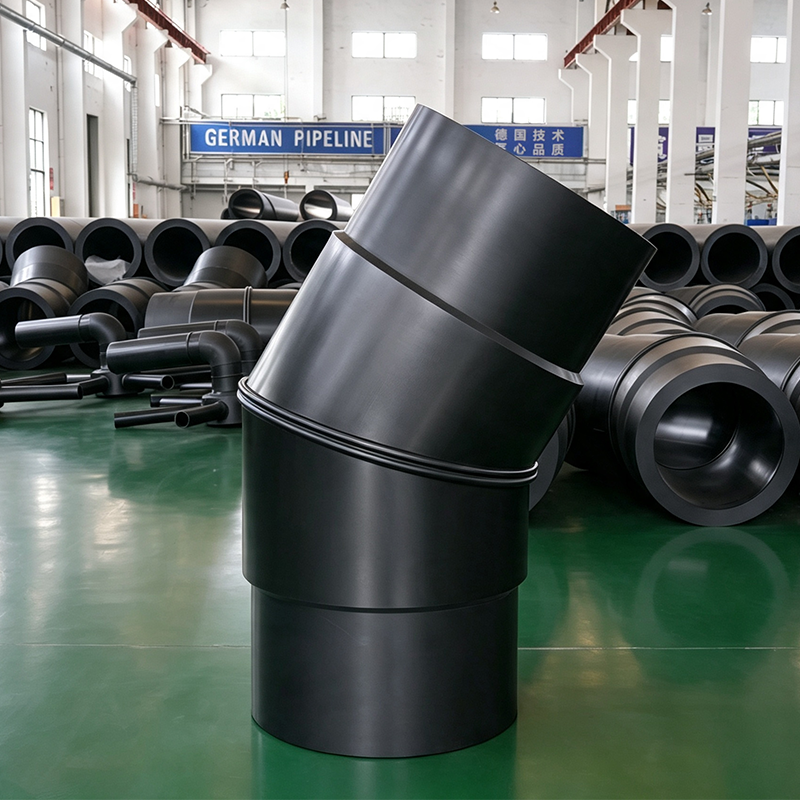
Our HDPE water pipe is made for exactly this duty, in pressure classes suited to distribution and fire water service. Butt-fused and electrofused joints reach the strength of the pipe wall itself, so the buried network has no gaskets to leak and no joint gaps to shield. Flexibility helps in the ground as well, absorbing minor settlement and allowing longer pulls with fewer fittings, which is a practical saving on yard piping and hydrant branches.
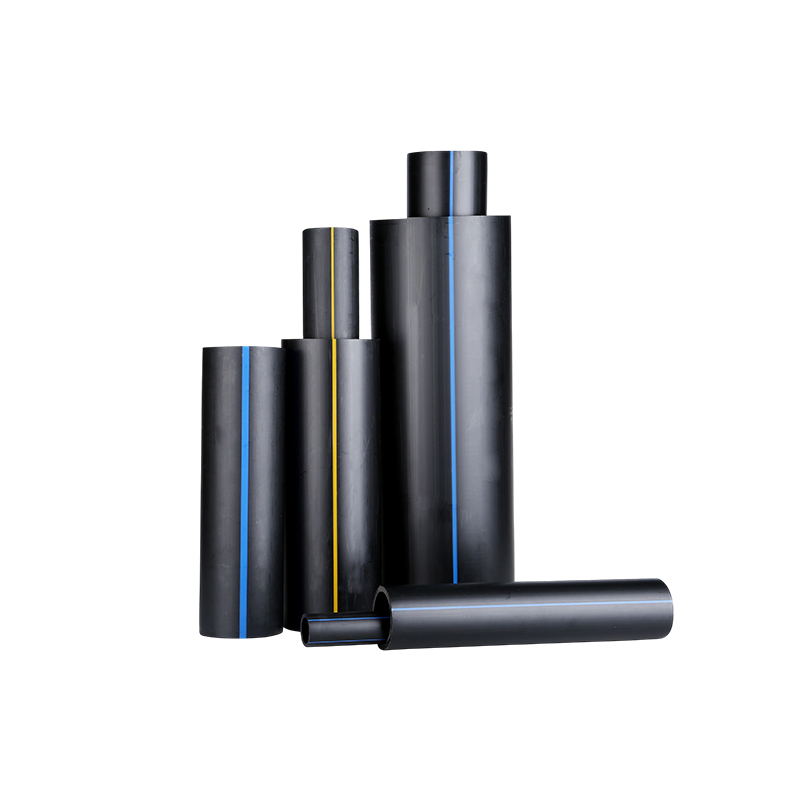 HDPE Water Pipe for Distribution and Fire MainsPE100 pipe with fused leak-free joints and flexible corrosion-resistant construction for municipal, agricultural and fire water networks.View Product →
Where a network has to run at higher heads, such as a pumped main feeding a site at the far end of a distribution loop, the high-pressure HDPE range extends the same corrosion-free approach to heavier duty.
PP-RCT Pipes for High-Temperature Lines and Risers
Heat is the variable that catches people out. Standard polypropylene has a comfortable temperature ceiling, and pushing beyond it shortens service life quietly rather than dramatically.
PP-RCT uses a modified crystalline structure that raises both the temperature and the pressure the pipe can carry, which makes it a sensible choice for hot water supply, risers and building service lines that sit close to heat sources. The bore stays smooth and non-corroding, so the hydraulic performance you calculate at design stage is still there years later. Because the pipe and fittings are joined by fusion welding, there are no threaded connections to pit or sealant to degrade.
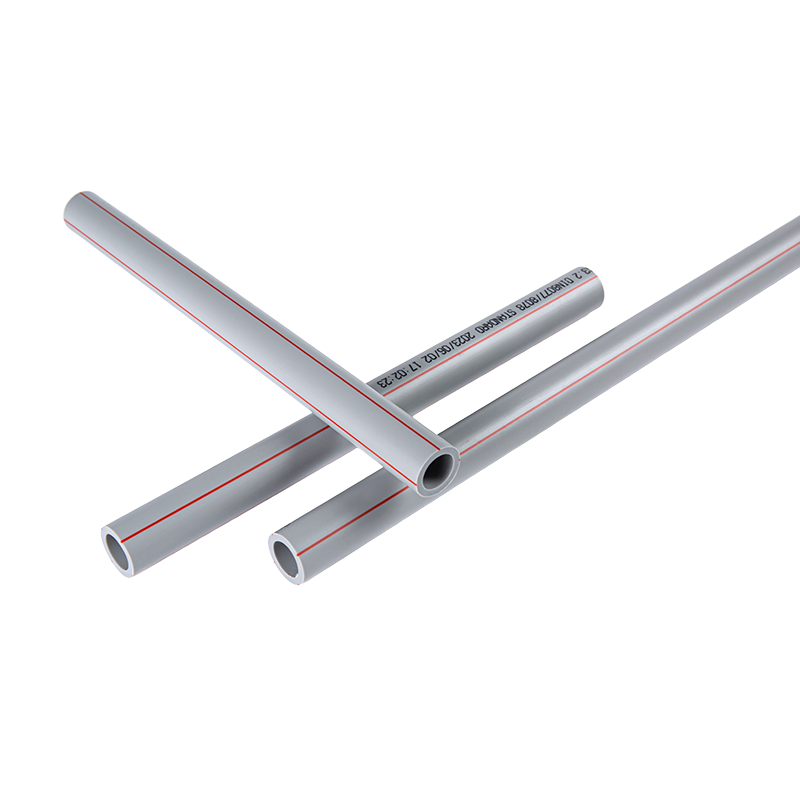 PPRCT Pipe for Hot and Cold Water SystemsAdvanced polypropylene pipe with higher pressure and temperature resistance, smooth non-corroding bore and fusion-welded joints for building services.View Product →
For lower-temperature lines, the standard and double-layer PP-R supply pipes cover the same logic at a different cost point, and we are happy to talk through which grade fits a given duty rather than pushing the most expensive option.
Fittings, Valves and Joints: Small Parts, Large Consequences
Most leaks we hear about start at a joint, not in the middle of a pipe run. That is why we produce couplings, elbows, tees, unions and valves in the same materials as the pipes they connect to, so a fusion joint becomes homogeneous rather than a boundary between two different metals.
For HDPE systems there are four connection families, each with a clear place: butt fusion for new long runs, electrofusion for tie-ins and repairs where there is no room to rotate a fusion machine, compression for smaller diameters and temporary work, and socket fusion for restricted spaces. Choosing the right one is as important as choosing the right pipe, because a corrosion-free line joined with the wrong fitting will still fail at the joint. Our electrofusion HDPE fittings were developed with that repair and tie-in scenario in mind.
Raw Material, Testing and Delivery
Corrosion resistance begins as a raw material property rather than a factory promise. We use 100 percent imported polyethylene and polypropylene feedstock from Borealis and Korean suppliers, run it on high-tech extrusion lines, and test the result in our CNAS-accredited national laboratory on site. Production follows national and international standards, and the process is monitored from raw material intake through to finished delivery.
Our plant in Jinshan District, Shanghai covers 70,000 square metres, and the company holds ISO 9001, ISO 14001 and OHSAS 18001 certification, along with Shanghai High-Tech Enterprise status. If you would like the longer background on how the company grew into a pipe manufacturer since 2004, that story is on our site as well.
A Practical Checklist Before You Specify
- Define the duty point: buried or exposed, cold or hot, continuous or intermittent, and the pressure class the line must hold.
- Check the code and listing requirements that apply to your building type before comparing materials on price.
- Decide the corrosion strategy up front, and be honest about whether coatings, inhibitors or cathodic protection will really be maintained.
- Keep joints homogeneous, and match the joining method to the site conditions rather than to habit.
- Plan pressure testing and flushing at design stage, including how dead legs and hydrant branches will be drained.
- Ask for material certificates, test reports and traceability records with the quotation, not after delivery.
- Compare lifecycle cost, not purchase cost: a line that keeps its bore needs no re-rating of the pump later.
Let's Talk About Your Project
Fire safe and corrosion resistant pipe systems are rarely decided by a single property. They are decided by how the material, the joint and the installation method work together over a service life measured in decades. If you are comparing options for a buried main, a riser or a combined building service, send us your duty conditions and we will tell you plainly which of our pipes fits and which does not.
Our team works in English, Spanish, French, Russian, Portuguese, Arabic, Italian, Polish, German and Dutch, and every enquiry reaches the people who actually run the extrusion lines. That is the part of the job we enjoy most: helping a specification go together properly the first time.

-
 No. 61, Jian-an Road, Xingta Industrial Park, Jinshan District, Shanghai, China.
-
 judy@zhsu.com
-
 +86-15728041804
Copyright © Shanghai Zhongsu Pipe Co., Ltd. All rights reserved. PPR Pipe and PPR Fittings Solutions PPR Piping Manufacturer in China
