
 English
 Français
 русский
 Español
 Português
 عربى
عربى italiano
 Polskie
 Deutsch
 Nederlands
Plastic Pipe Temperature Ratings: How Heat Affects Pressure and Safety
Content
- 1 What a Temperature Rating Really Means
- 2 Temperature Limits at a Glance
- 3 Why Pressure Falls as Temperature Rises
- 4 Hot-Water Service: Where PP-R and PP-RCT Fit
- 5 Cold Mains, Buried Lines and Drainage
- 6 Ratings Belong to the Whole System
- 7 Common Mistakes When Reading a Temperature Rating
- 8 A Practical Checklist Before You Specify
Every plastic pipe carries two numbers that decide whether an installation is safe: the pressure it is expected to hold, and the temperature at which that pressure is measured. Move the second number and the first one changes. This relationship explains why a line that performs perfectly on cold mains water can fail in a hot-water riser, and why a PN20 label is never a promise of 20 bar at whatever temperature a designer happens to choose.
Understanding plastic pipe temperature ratings is less about memorising tables and more about knowing how thermoplastics behave when they get warm. The logic is consistent across PVC, CPVC, PEX, PP-R, PP-RCT, PE-RT and HDPE, so once you know the rules you can read almost any manufacturer data sheet with confidence.
What a Temperature Rating Really Means
A temperature rating is not a single limit. It is a reference point, usually 23°C (73°F) in North American practice and 20°C in ISO and AS/NZS documents, at which a pipe is assigned a working pressure for a defined service life. A pipe described as PN16, for instance, is expected to withstand 16 bar of continuous internal pressure for 50 years while carrying water at its reference temperature.
Push the temperature up and the material softens at a molecular level. Polymer chains slide past one another more easily, so the stress at which the pipe eventually ruptures falls. Engineers capture this using long-term hydrostatic strength, extrapolated over 50 years from accelerated tests. The result is a curve rather than a number, and the standard you work to decides how that curve becomes a permitted design pressure, safety factor included. Hot-water systems generally use smaller safety factors than cold-water systems, but the permitted pressure still drops as the temperature climbs.
Two practical consequences follow. First, the same pipe may be sold with several pressure ratings, each tied to a different temperature. Second, a rating is only valid for the fluid and the service conditions it was written for.
Temperature Limits at a Glance
Different plastics tolerate heat very differently. The table below summarises the general territory each family occupies. Treat it as a map rather than a specification, because wall thickness, compound grade, jointing method and the governing standard all shift the final numbers.
| Material | Typical continuous service limit | Rating reference temperature | Hot-water suitability |
|---|---|---|---|
| PVC-U | 54-60°C (130-140°F) | 23°C (73°F) | Cold water only; not for hot-water distribution |
| CPVC | Up to about 82°C (180°F) with derating | 23°C (73°F) | Hot and cold potable water |
| PEX | About 82°C continuous, higher short-term peaks | 23°C (73°F) | Hot and cold water, pressure derated at high temperature |
| PP-R | About 70°C continuous, peaks near 95°C | 20°C | Hot and cold potable water |
| PP-RCT | About 70-80°C continuous, peaks near 95°C | 20°C | Hot water with better pressure retention |
| PE-RT | About 60-70°C continuous | 20°C | Floor heating and moderate hot water |
| PE100 / HDPE | Reference 20°C, derated above roughly 30°C | 20°C | Cold water, drainage and buried mains |
The gap between PVC-U and CPVC is the clearest illustration. Both are vinyl compounds, but CPVC carries more chlorine in its structure, which lifts the softening point enough to allow hot-water service with derating. CPVC tubing in SDR 11, for example, is commonly published at 400 psi at 73°F but only around 100 psi at 180°F. That single comparison says more about temperature ratings than any definition.
Why Pressure Falls as Temperature Rises
Once you accept that strength declines with heat, the next question is how much. The answer comes from published derating factors. For polyethylene pipes, ISO 4427 and AS/NZS 4130 provide factors above the 20°C reference point; for PP-R and PP-RCT, DIN 8077, DIN 8078 and ISO 15874 do the same job. The pattern is always similar: modest losses in the 30°C to 40°C range, sharper losses beyond 50°C.
| Service temperature | Typical derating factor | Approximate pressure available from a PN16 line |
|---|---|---|
| 20°C | 1.00 | 16 bar |
| 30°C | 0.87 | About 14 bar |
| 40°C | 0.74 | About 12 bar |
| 50°C | 0.60 | About 10 bar |
Two cautions are worth repeating. Derating factors apply to the design pressure, not to the surge pressure a system may briefly see during a pump start or a water hammer event. And a temperature rating is a system rating: a length of pipe rated for 70°C continuous service is only as good as the fittings, unions and valves joined to it. Heat-fusion joints in PP-R and HDPE are generally as strong as the pipe wall itself, which is one reason these materials are so widely used in hot-water and buried applications, but threaded transitions and mechanical components still need to be checked against the same temperature basis.
Hot-Water Service: Where PP-R and PP-RCT Fit
For domestic hot water and heating circuits, polypropylene random copolymer has become a familiar choice in Europe, Asia and the Middle East. It handles continuous service around 70°C with short excursions up to about 95°C, resists scale build-up, and its fusion joints remove the weakest point of a mechanically jointed system.
PP-RCT takes the same idea further. The crystallinity of the material is modified during polymerisation, producing a finer crystal structure and a measurably higher long-term strength at elevated temperature. In practice a designer can either keep the wall thickness and gain pressure at 70°C, or keep the pressure and use a thinner wall. Manufacturers have continued to develop this family of compounds, and the resulting grades retain more of their rating in hot-water duty than standard PP-R. The same thinking applies to every component in the circuit: elbows, tees, couplings and valves should share the pipe temperature basis, otherwise the pipe rating is only theoretical.
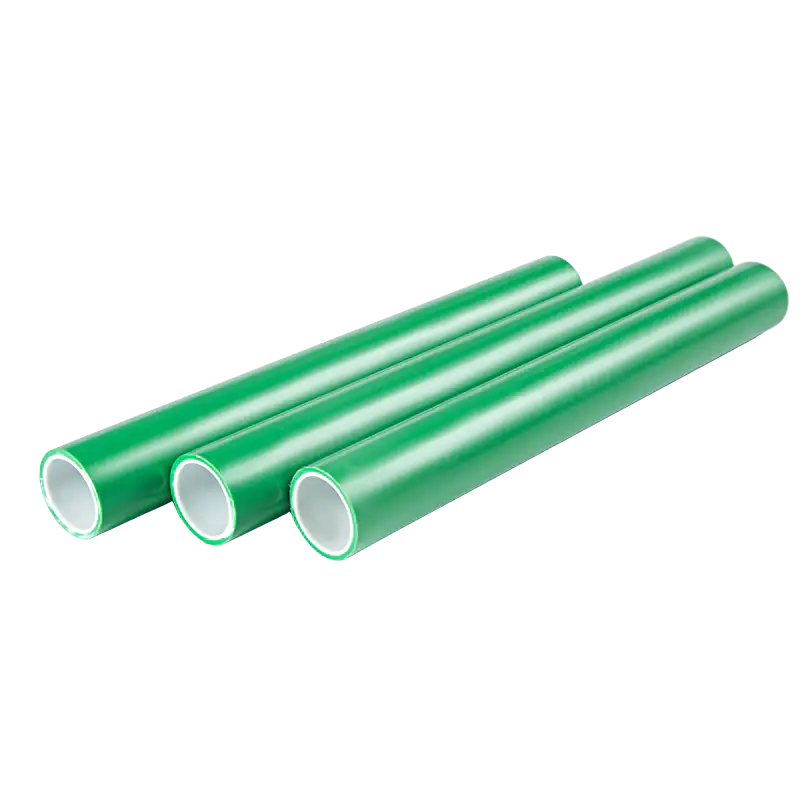
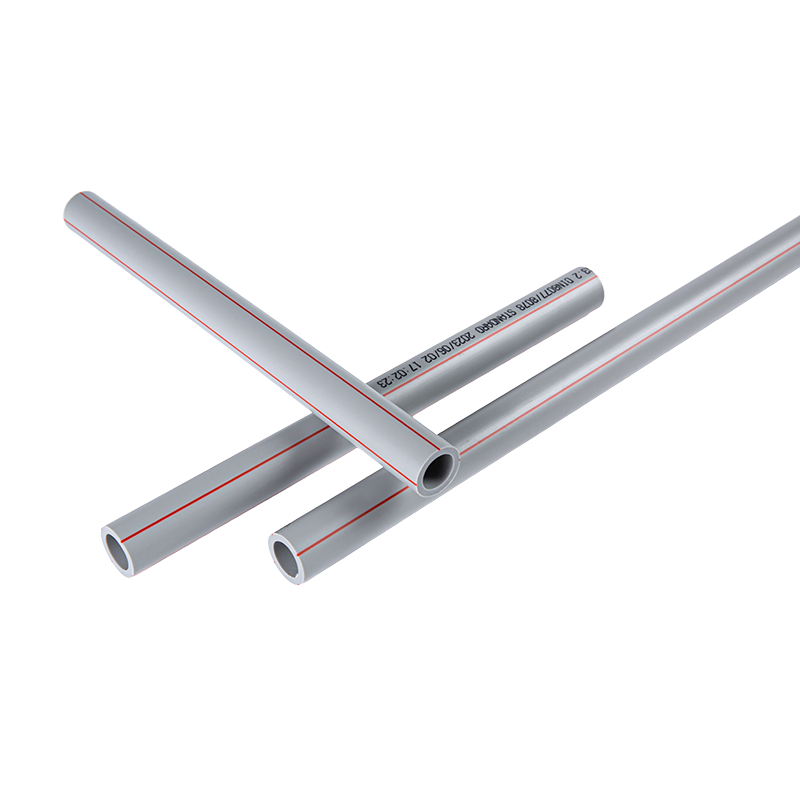 PPRCT Pipe for High-Temperature Hot and Cold Water SystemsPP-RCT piping with matching fittings delivers higher long-term strength at elevated temperatures, making it worth reviewing when hot-water pressure performance drives the pipe schedule.View Product →
If hot water at sustained temperature is the main design case, this is the conversation to have with your supplier before the pipe schedule is fixed. Our own work on high-temperature, pressure-resistant PPR material follows exactly that path.
Cold Mains, Buried Lines and Drainage
HDPE behaves differently from polypropylene, and that difference matters when you read a temperature rating. PE100 is normally referenced at 20°C and is rarely chosen for hot water, but it excels in buried water mains, sewage and drainage, rural water networks and large-diameter underground work. Above roughly 30°C the allowable pressure begins to fall, so designers working in warm climates or on industrial outfalls need to apply derating factors rather than the nominal figure.
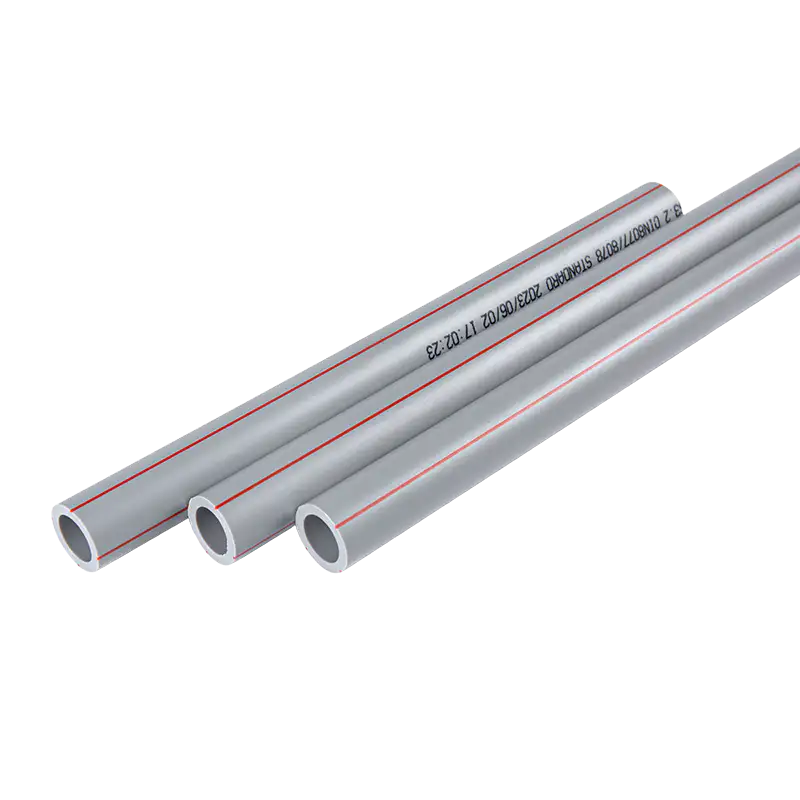
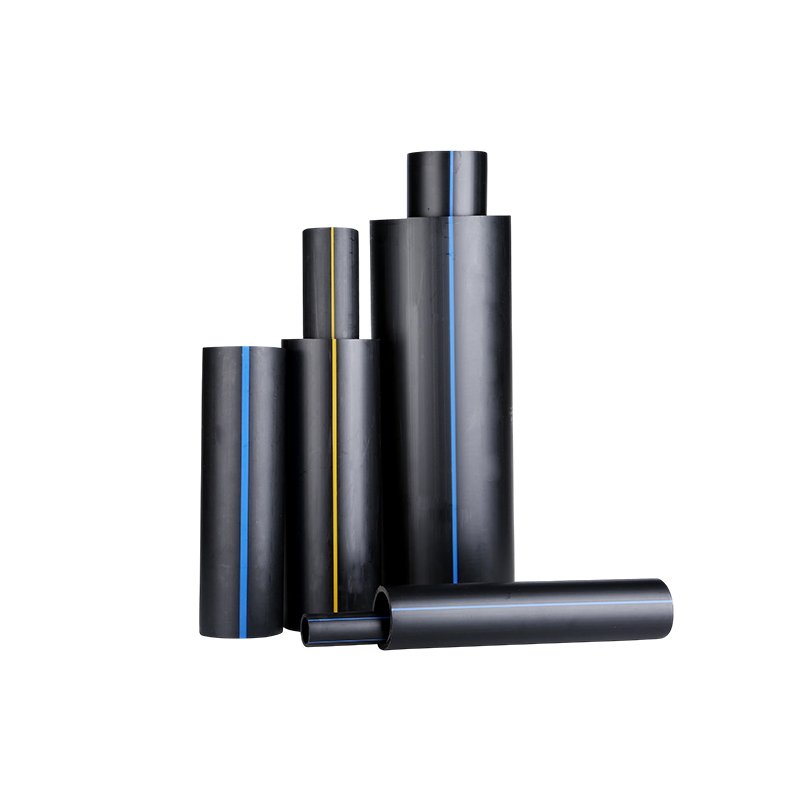 HDPE PE100 Water Pipe for Municipal and Buried ApplicationsPE100 HDPE pipe suits buried water mains, sewers, and large-diameter networks where corrosion resistance, flexible fusion joints, and derating above 30°C guide selection.View Product →
Where an HDPE line runs above ground in strong sunlight, thermal expansion and UV exposure deserve as much attention as the pressure rating. Support spacing and expansion loops usually matter more than the number printed on the pipe.
Ratings Belong to the Whole System
PP-R supply pipes illustrate the point neatly. A single-layer PP-R pipe is rated for both cold and hot potable water service within its temperature envelope, and its pressure rating at 70°C will be a fraction of its 20°C value. That same derating has to be applied to every part downstream: threaded couplings, reducing tees, unions and ball valves. If a valve seal is rated to 60°C while the pipe is designed for 70°C, the system rating is 60°C, whatever the pipe label says.
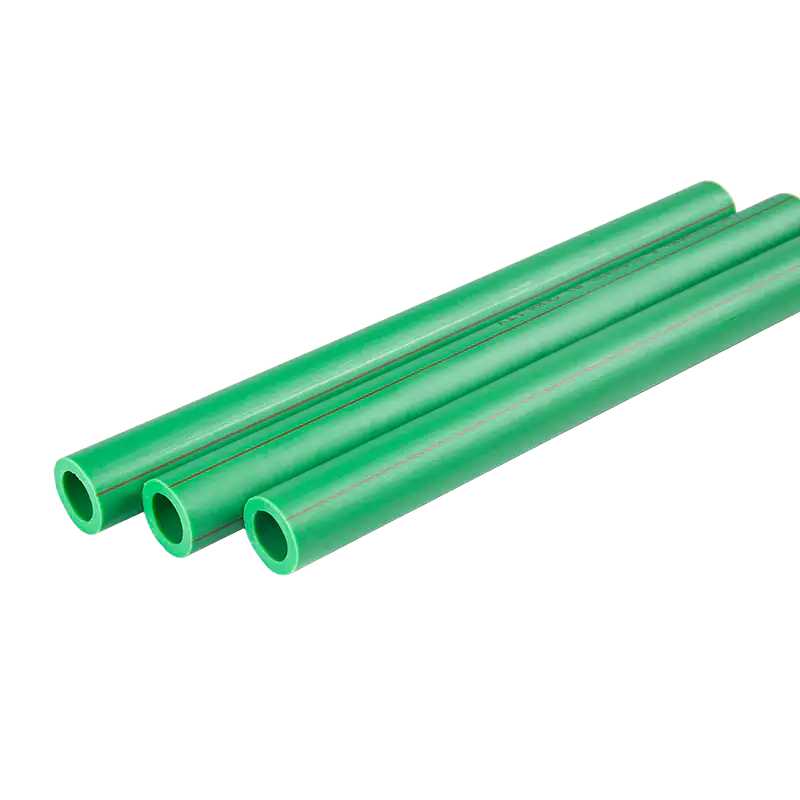
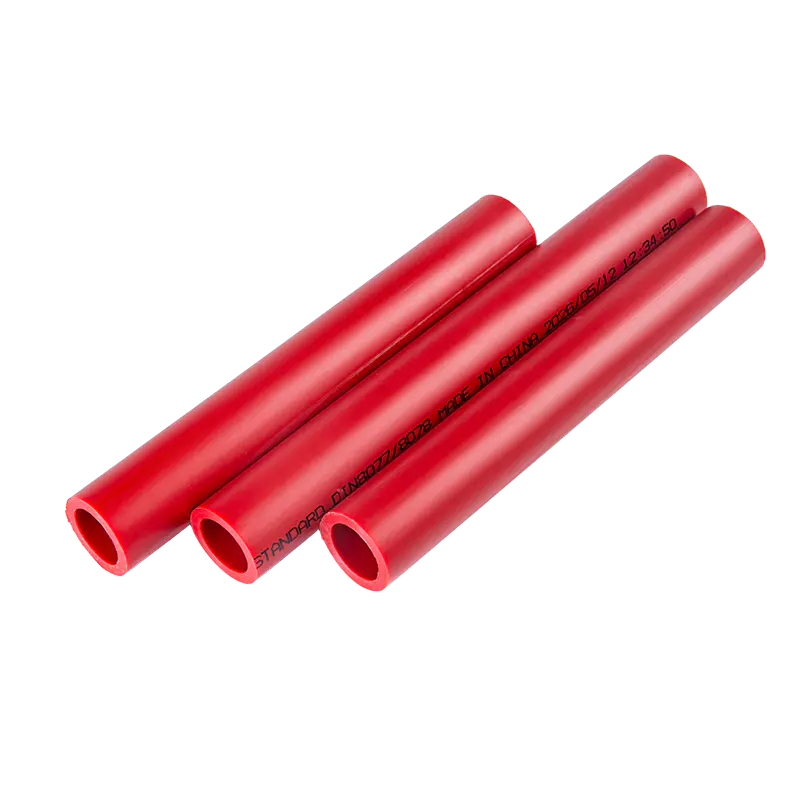 Single Layer PPR Pipe for Hot and Cold Water SupplyA cost-effective homogeneous PP-R pipe for hot and cold potable water and heating, where matching derated fittings determine the practical system temperature rating.View Product →
This is why suppliers who manufacture both pipe and fittings under one quality system can be easier to work with. A single pressure-temperature table covering the complete assembly removes the guesswork that appears when pipe and fittings arrive from different sources.
Common Mistakes When Reading a Temperature Rating
- Assuming the printed pressure figure applies at every temperature, rather than only at the reference temperature.
- Mixing standards, for example comparing a 73°F rating with a 20°C curve, without converting first.
- Designing to a burst value instead of the long-term design stress used for a 50-year service life.
- Ignoring short-term peaks such as pasteurisation, boosting or solar heating of exposed lines.
- Checking the pipe but not the valves, unions and threaded transitions.
- Reusing a cold-water material in a hot-water line because the pipes look similar on site.
A Practical Checklist Before You Specify
- Confirm the real maximum continuous operating temperature, not the boiler set point.
- Note any peak temperature and how long it lasts.
- Convert your pressure requirement to the material reference temperature.
- Apply the derating factor from the governing standard.
- Check that pipe, fittings and valves share the same temperature basis.
- Confirm the application is permitted by the local code.
- Ask the manufacturer for a written pressure-temperature table for the exact product.
Shanghai Zhongsu Pipe Co., Ltd. has been making PPR, PP-RCT, PE-RT and HDPE pipes and fittings in Shanghai since 2004. Our pipes are produced from fully imported raw materials, tested in a CNAS-accredited national laboratory, and delivered under ISO 9001, ISO 14001 and OHSAS 18001 certified systems. If you are comparing ratings for a hot-water riser, a floor heating loop or a buried rural water main, send us the operating temperature and pressure and we will walk through the derating with you, component by component.

-
 No. 61, Jian-an Road, Xingta Industrial Park, Jinshan District, Shanghai, China.
-
 judy@zhsu.com
-
 +86-15728041804
Copyright © Shanghai Zhongsu Pipe Co., Ltd. All rights reserved. PPR Pipe and PPR Fittings Solutions PPR Piping Manufacturer in China
