
 English
 Français
 русский
 Español
 Português
 عربى
عربى italiano
 Polskie
 Deutsch
 Nederlands
PE Pipe Fittings China: A Complete Guide to Quality, Types, and Manufacturers
Content
- 1 Why China Has Become a Key Sourcing Hub for PE Pipe Fittings
- 2 Understanding PE Pipe Fittings: Materials and Common Types
- 3 Quality Standards Behind PE Pipe Fittings in China
- 4 PE Pipe Fittings Applications Across Water Systems
- 5 How to Evaluate a PE Pipe Fittings Manufacturer in China
- 6 Why Global Buyers Choose ZHSU as a PE Pipe Fittings Manufacturer
- 7 Conclusion: Building a Long-Term PE Pipe Fittings Supply Relationship in China
China has become the world's leading production base for polyethylene piping systems, and PE pipe fittings China buyers source today must meet strict performance requirements for pressure, durability, and chemical resistance. Whether you are a distributor expanding your product range or a contractor planning a municipal water supply project, understanding how PE pipe fittings are manufactured and verified in China is the first step toward a reliable supply partnership.
Why China Has Become a Key Sourcing Hub for PE Pipe Fittings
Over the past two decades, Chinese manufacturers have modernized their production lines and testing laboratories to serve both domestic infrastructure programs and overseas markets. The rapid growth of urban water networks, agricultural irrigation projects, and industrial piping installations has created a deep manufacturing ecosystem. As a result, international buyers now treat China as a primary destination for PE pipe fittings of various sizes, pressure ratings, and connection types.
Shanghai Zhongsu Pipe Co., Ltd. (ZHSU) is one such manufacturer that has grown alongside this evolution. Since 2004, the company has operated a 70,000-square-meter production facility in Shanghai's Jinshan District, where it develops PPR, HDPE, and PE-RT pipes together with matching fittings. Although the company is perhaps best known in the PPR segment, its HDPE product line — including HDPE pipe fittings — plays a significant role for buyers seeking complete polyethylene piping systems.
Understanding PE Pipe Fittings: Materials and Common Types
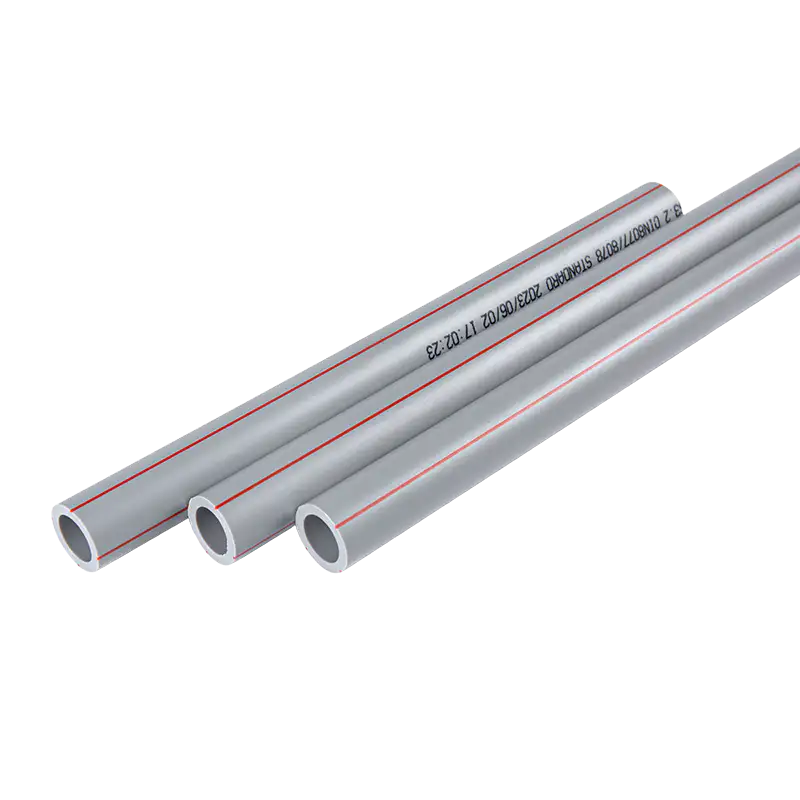
PE pipe fittings China manufacturers provide are usually made from PE100 or PE80 grades of high-density polyethylene, which are valued for their impact resistance, flexibility, and long service life. PE100 is the most common grade supplied today because it offers higher pressure resistance and better stress-crack resistance compared with earlier materials, allowing thinner wall thicknesses for the same operating pressure.
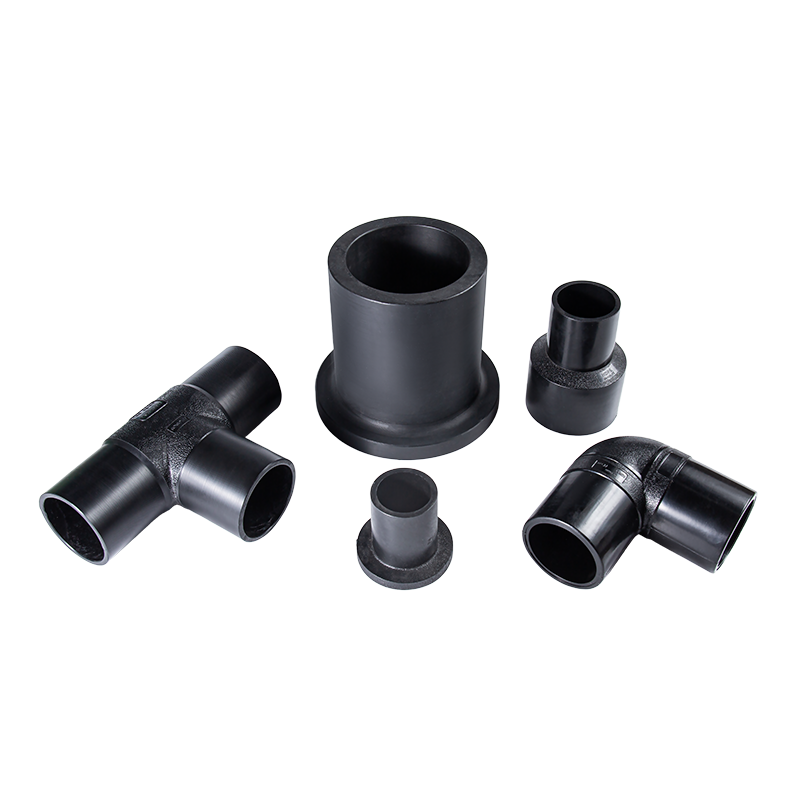
Common types of PE pipe fittings
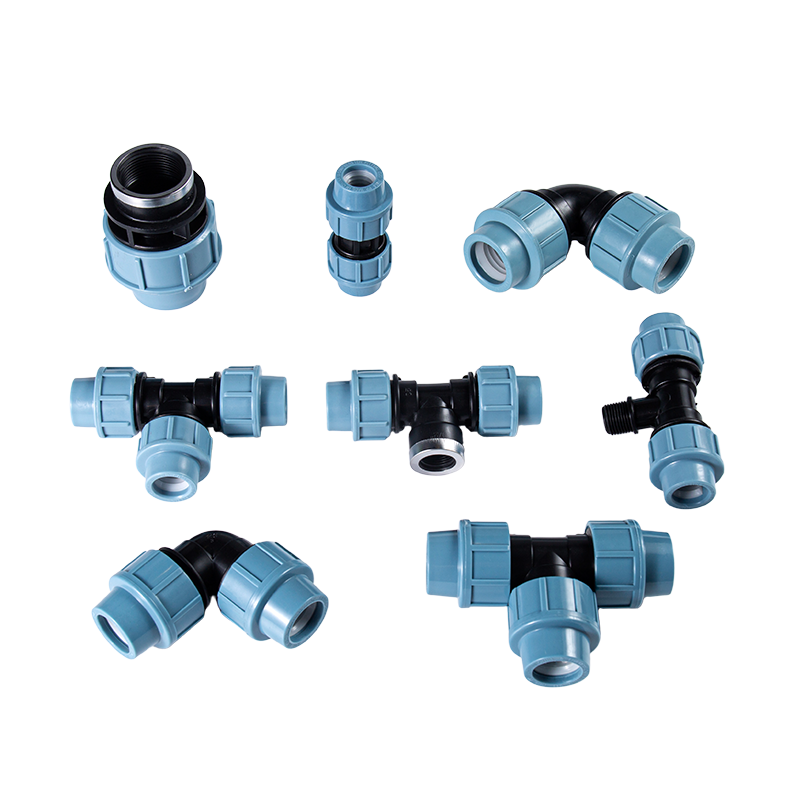
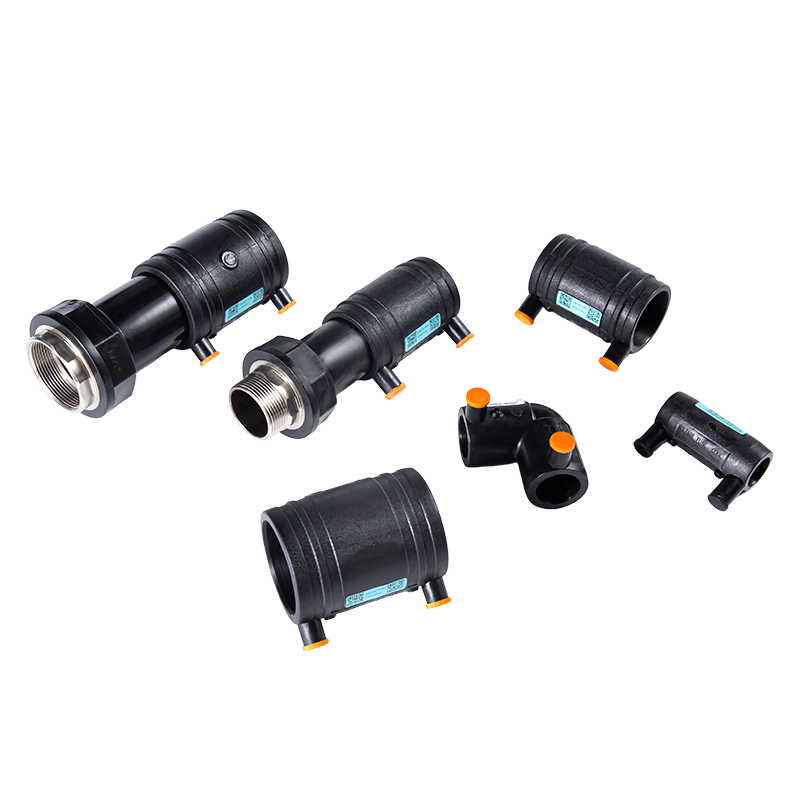
The table below summarizes the most frequently requested PE pipe fitting categories in international procurement:
| Fitting Type | Function | Typical Connection Method |
|---|---|---|
| PE Coupling | Joins two pipe lengths | Butt fusion or electrofusion |
| PE Elbow | Changes flow direction | Butt fusion or socket fusion |
| PE Tee | Creates branch connections | Butt fusion or electrofusion |
| PE Reducer | Transitions between diameters | Butt fusion |
| PE Flange | Enables mechanical connections | Flange joint with bolts |
| PE End Cap | Closes the end of a pipeline | Butt fusion |
Buyers should always confirm the exact material grade, dimension ratio (SDR), and pressure class before placing an order, because these parameters determine compatibility with the pipes and the hydraulic performance of the complete system.
Quality Standards Behind PE Pipe Fittings in China
Reputable Chinese manufacturers produce PE pipe fittings in accordance with national and international standards. For domestic sales, GB/T 13663 is a widely referenced standard for PE piping systems. For export-oriented suppliers, ISO 4437 and EN 12201 are commonly applied, and many factories hold ISO 9001 quality management certification.
At ZHSU, production is carried out under an ISO 9001, ISO 14001, and OHSAS 18001 certified management system. The company has also invested in a CNAS-accredited national laboratory, where raw materials and finished products are tested at multiple stages. The entire process — from raw material intake to final packaging — takes place under controlled conditions, which matters especially for fittings that will carry drinking water.
One particular point that international buyers often ask about is raw material sourcing. Many Chinese manufacturers now purchase imported polyethylene resins to achieve more consistent melt flow and mechanical properties. ZHSU follows the same approach, using imported raw materials for its plastic products, which helps stabilize product quality across different production batches.
PE Pipe Fittings Applications Across Water Systems
PE pipe fittings China manufacturers produce are installed in an extremely wide range of water-related applications. The combination of corrosion resistance, weather resistance, and the ability to withstand ground movement makes PE particularly suitable for buried pipelines.
- Municipal water supply systems, where PE's leak-free jointing reduces water loss.
- Wastewater and sewage networks, where chemical resistance is essential.
- Large-diameter underground drainage projects that require long service life.
- Rural water network renewal programs, where flexibility simplifies installation.
- Building water supply and drainage systems, both above and below grade.
Because a pipeline is only as reliable as its weakest joint, fittings must be manufactured to the same quality level as the pipe itself. In practice, this means that dimensional tolerance, fusion compatibility, and pressure retention should be verified before the fittings are shipped.
How to Evaluate a PE Pipe Fittings Manufacturer in China
When you search for "PE pipe fittings China," you will encounter many suppliers. The challenge is distinguishing between trading companies and genuine manufacturers — and then confirming which factory can actually meet your technical and commercial requirements.
Key evaluation points
- Confirm the factory location and production scale. A dedicated manufacturing site with significant floor area indicates a long-term industrial commitment.
- Check certifications. ISO 9001 is essential; additional certifications such as ISO 14001 and OHSAS 18001 reflect more comprehensive management practices.
- Ask about testing capability. A factory with its own laboratory can provide faster and more reliable quality feedback.
- Request material certificates and test reports. These documents confirm the resin grade and the physical properties of the fittings.
- Evaluate communication and lead time. A manufacturer that can provide engineering guidance and clear delivery schedules is a more valuable partner for ongoing projects.
It is also worth visiting the supplier's facility or arranging a video inspection. Seeing the production line, extrusion equipment, injection molding machines for fittings, and the testing laboratory gives you confidence that the products will match documented specifications.
Why Global Buyers Choose ZHSU as a PE Pipe Fittings Manufacturer
ZHSU's position in Shanghai provides useful export advantages: proximity to a major port, a well-established industrial supply chain, and access to skilled technical staff. The company's product strategy of combining pipe and fitting production under one roof means that buyers can source complete systems rather than coordinating separate suppliers for pipes and fittings.
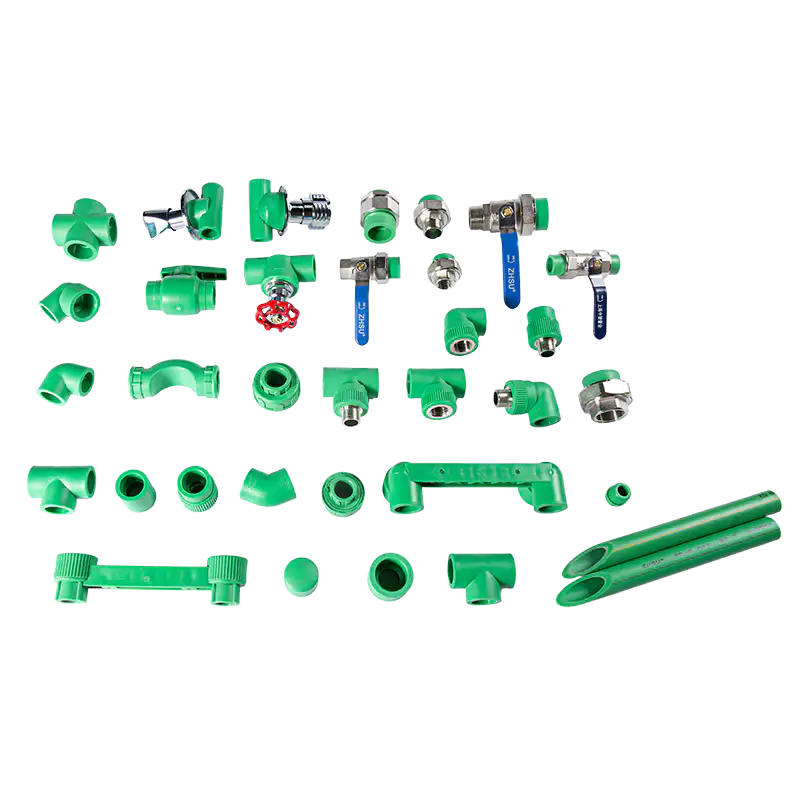
In the HDPE segment, ZHSU produces HDPE pipes and corresponding fittings for water supply and drainage applications. The company also offers the broader PPR piping family — including PPR fittings such as couplings, elbows, tees, unions, and valves — for building water supply systems. This wide scope is an advantage for customers who trade in multiple piping categories and prefer to consolidate their supplier base.
The company's stated mission, "cherish every drop of water," reflects a commitment to water efficiency and reliable water delivery. For international buyers, the practical implication is that the company prioritizes the performance of products that transport drinking water and protect water resources.
Conclusion: Building a Long-Term PE Pipe Fittings Supply Relationship in China
Sourcing PE pipe fittings China manufacturers offer is a strategic decision. The right supplier should not only deliver fittings at a competitive price but also provide consistent quality, traceable raw materials, and responsive technical support. By focusing on manufacturing standards, testing capabilities, and industry experience, you can reduce the risks associated with long-distance procurement and build a supply chain that supports your business for years to come.
Shanghai Zhongsu Pipe Co., Ltd. brings more than twenty years of pipe manufacturing experience to that partnership. From PE pipe fittings to complete PPR and HDPE piping systems, ZHSU is equipped to serve global customers looking for a dependable Chinese manufacturing partner.

-
 No. 61, Jian-an Road, Xingta Industrial Park, Jinshan District, Shanghai, China.
-
 judy@zhsu.com
-
 +86-15728041804
Copyright © Shanghai Zhongsu Pipe Co., Ltd. All rights reserved. PPR Pipe and PPR Fittings Solutions PPR Piping Manufacturer in China
