
 English
 Français
 русский
 Español
 Português
 عربى
 italiano
 Polskie
 Deutsch
 Nederlands

Wear-Resistant PPR Aluminum Pipe: Structure, Benefits and Selection Tips
Content
Most conversations about a wear resistant PPR aluminum pipe start in the wrong place. People picture a pipe grinding against gravel, when the wear that actually matters in a building is quieter: erosion from years of moving water, scuffing during handling, and the slow fatigue that comes from a pipe expanding and contracting every time a hot tap opens. We have been extruding polypropylene pipe in Shanghai since 2004, and the problems we are asked to look at rarely come from one dramatic event. They come from small habits repeated thousands of times.
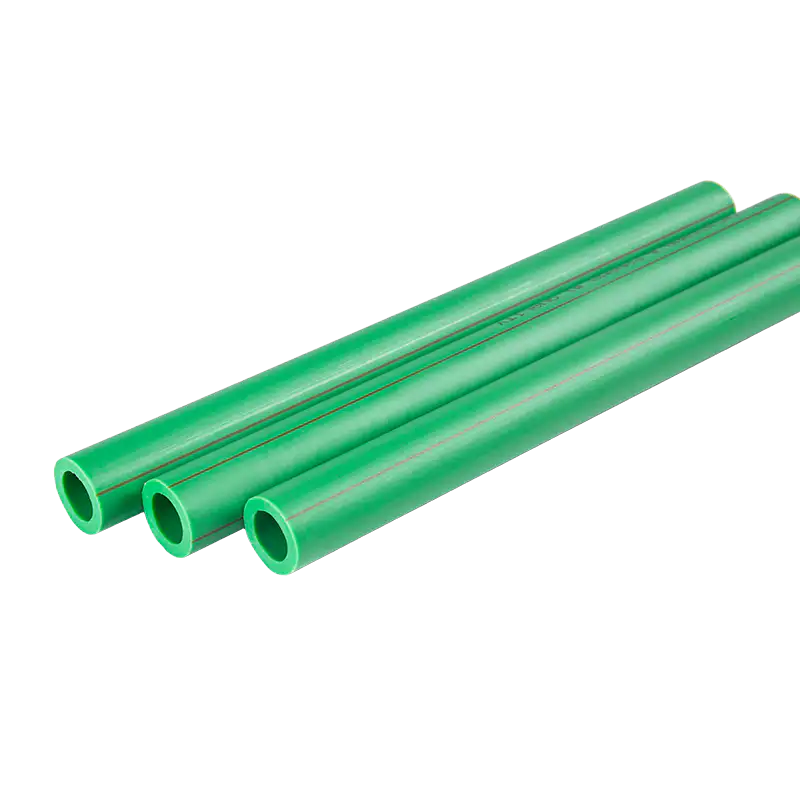
A PPR aluminum pipe is usually a five-layer composite: polypropylene inside, an aluminum sheet in the middle, polypropylene outside, and two adhesive layers holding the sandwich together. That structure is the reason these pipes have a reputation for toughness in service. Below is how the layers earn it, where the composite genuinely outperforms a plain PPR pipe, and where a simpler pipe is still the better buy.
What Wear Resistance Really Means in a Water Pipe
In a pressurised water system, wear shows up in three ways, and only one of them involves anything physically rubbing against the pipe.
- Hydraulic erosion. Water carrying fine sand, rust particles or construction debris acts like a very slow abrasive. Over decades it polishes, then pits, the bore. A smooth, non-corroding liner keeps friction losses low and stops the surface from breaking up.
- Mechanical abrasion. Pipes are dragged across screed, pulled through sleeves, stacked on site and cut with saws. A soft wall picks up deep scores, and a score near a joint is where a stress crack later begins.
- Thermal-mechanical wear. Hot water makes polypropylene expand. In a long straight run that movement is transferred to supports, clamps and joints, so a pipe that sags between brackets is also a pipe being worked at every fitting.
The aluminum core tackles the second and third of these directly, and helps with the first by keeping the bore round under load. In practical terms, a well-made wear-resistant PPR aluminum pipe stays straight, holds its wall thickness along the top of a horizontal run, and does not thin out where flow velocity is highest.
Inside the Five Layers: Why the Aluminum Core Changes Behaviour
The aluminum sheet is thin, often a fraction of a millimetre, but it does structural work rather than decoration. Bonded to polypropylene on both faces, it carries part of the hoop and bending load, which changes how the whole pipe behaves under heat and pressure.
| Property | Monolayer PPR | Wear-resistant PPR aluminum composite |
|---|---|---|
| Linear expansion when heated | Noticeable; needs loops and careful anchoring | Roughly one third of plain PPR, so long runs are easier to detail |
| Oxygen and light transmission | Low but real permeation through the wall | Aluminum layer acts as a barrier |
| Ring stiffness and sag between supports | Lower; more brackets required | Higher; wider support spacing is possible |
| Pressure capability at elevated temperature | Drops as temperature climbs | Held with a larger margin at the same wall thickness |
| Outer wall hardness | Softer, easier to score on site | Harder to scuff during transport and pulling |
| Joining method | Socket fusion | Socket fusion, with careful edge preparation at the aluminum |
| Typical best fit | Indoor hot and cold water on cost-driven projects | Tall risers, long exposed runs, oxygen-sensitive systems |
Read that table as a guide rather than a datasheet. The number that matters on your project is the pressure rating at your working temperature, not the rating printed on a cold-water test. Composite pipes are commonly offered in PN20 and PN25 classes, and the derating curve for hot water is what should drive your wall thickness choice.
Where This Pipe Earns Its Place on Site
We see the composite format chosen most often in situations where rigidity and predictable movement save more money than the pipe itself costs.
- Hot water risers in mid-rise and high-rise buildings, where a straight, self-supporting column is far easier to install than a floppy one.
- Long horizontal runs in corridors and ceiling voids, where fewer brackets mean faster first fix.
- Heating and chilled water circuits where oxygen ingress slowly corrodes pumps, valves and metal fittings.
- Renovation work, where pipe has to be pulled through existing shafts and old chases without picking up damage.
- Exposed surface pipework in plant rooms, where straight lines matter and sunlight reaches the pipe.
For buried mains, slurry lines or raw water with heavy sediment, the honest answer is usually HDPE rather than any polypropylene composite, because a fused polyethylene system absorbs ground movement and handles abrasive solids well. If your project leans that way, our HDPE pipe for water supply is the more sensible starting point.
Installation Habits That Protect the Wear Surface
Half the durability of a composite pipe is decided before the water is ever turned on. These are the habits we repeat to every installation team we work with.
- Cut square with a sharp, fine-toothed blade made for plastic. A burred or angled cut creates a thin lip that folds during fusion and becomes a crack starter.
- Scrape the aluminum edge clean and keep it dry. The metal layer must not carry moisture or shavings into the weld zone.
- Respect the heating time for the diameter. Under-heating gives a cold joint; over-heating pushes molten material into the bore and narrows the flow path.
- Do not rotate the pipe once it is inserted. A quarter turn is enough; twisting smears the melt and weakens the bond.
- Let the joint cool untouched. Cooling under load is the most common cause of a leak that appears a season later.
- Leave expansion allowance at anchors, and never clamp a long run rigid at both ends.
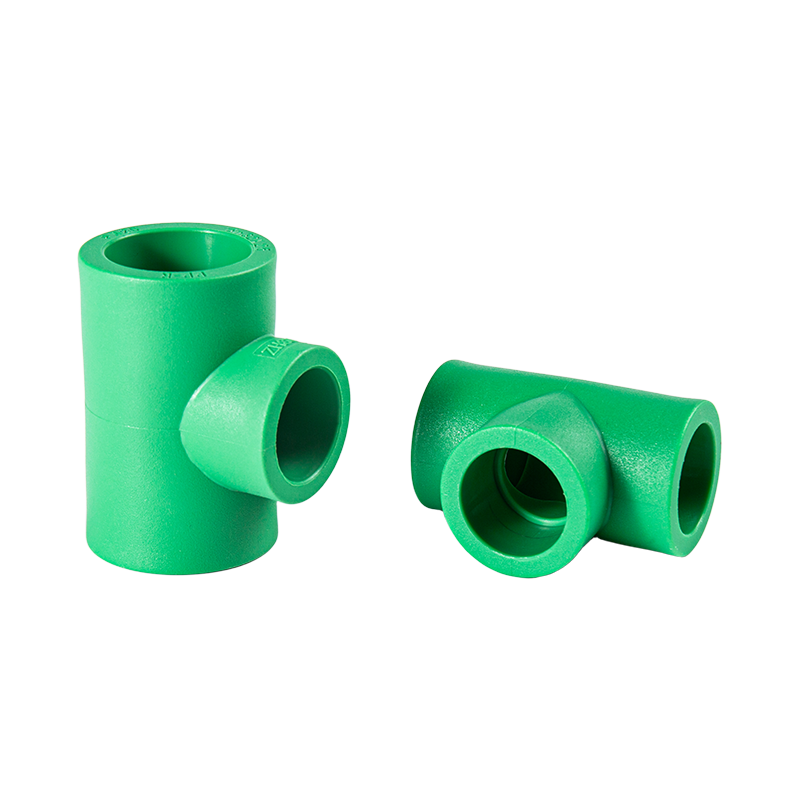
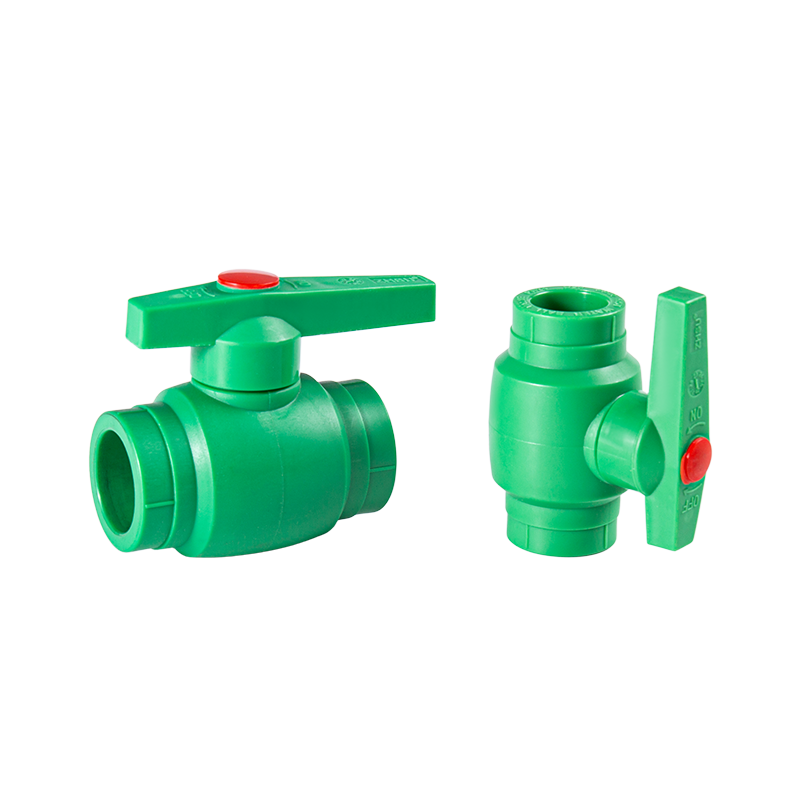
Fittings deserve the same attention as the pipe. A perfectly extruded composite joined to a thin-walled fitting simply moves the weak point a few centimetres along the line, so it pays to buy the pipe and the fittings as one matched system. Our
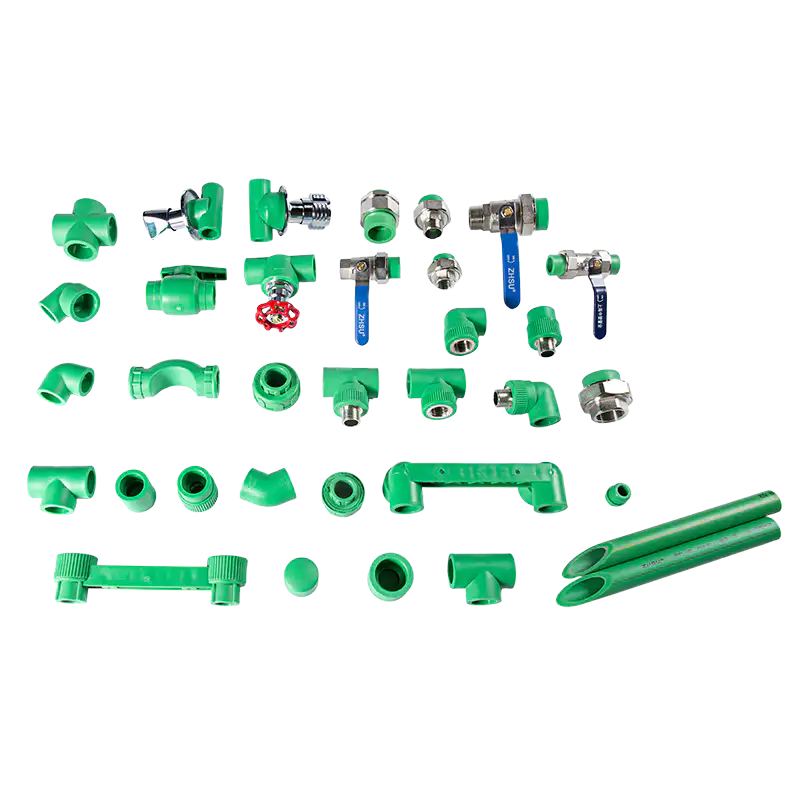 PPR Pipe Fittings for Matched Piping SystemsElbows, tees, couplings, valves and adapters in 20–160 mm, heat-fusion joined, for a matched PPR piping system.View Product →
Matching the Pipe to the Project and to the Supplier
Not every job needs an aluminum core, and we would rather say so. For straightforward indoor cold and hot water distribution where supports are close and runs are short, a good monolayer or double-layer PPR pipe delivers the same service life for less money. Where the wall needs extra stiffness or the layout has long, hot, unsupported spans, the composite format is worth the premium.
If you are working on the hot water side and pushing temperatures higher than standard PPR comfortably allows, PP-RCT is the material to look at, since its crystalline structure holds pressure better as the temperature rises. Our
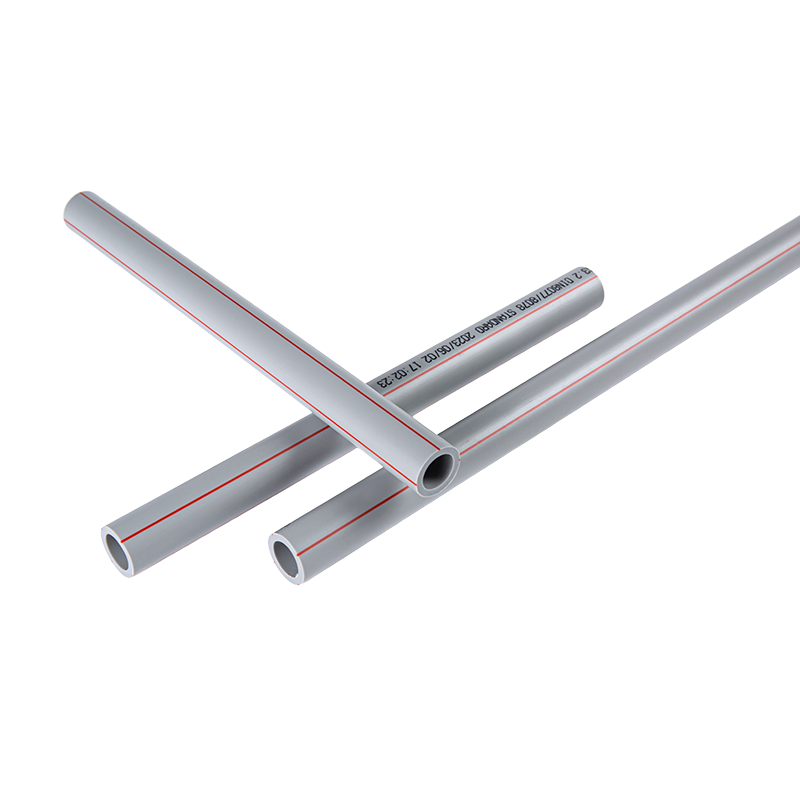 PP-RCT Pipe for Higher-Temperature Hot WaterAdvanced polypropylene piping in 20–160 mm and PN10–PN20, designed to hold pressure better as hot-water temperatures rise.View Product →
is built for exactly that duty.
For water supply lines that need a clean, smooth bore with an added barrier layer and good dimensional stability, the double-layer construction is a practical middle ground between plain PPR and a full composite. You can see the range here:
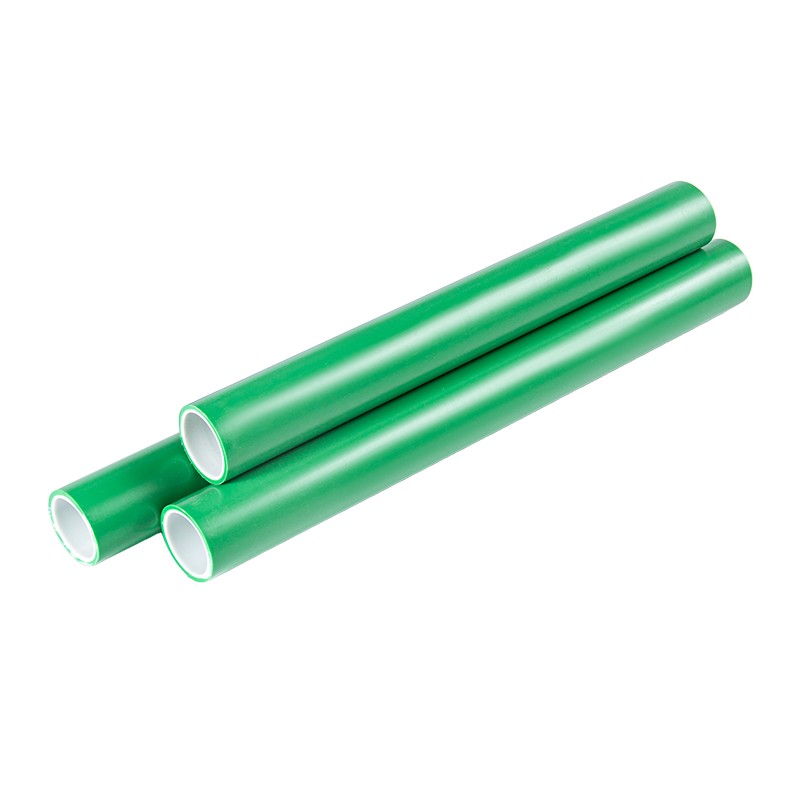 Double Layer PPR Pipe with Barrier and UV OptionsTwo-layer PPR in 20–63 mm with an antibacterial, light-shielding inner layer and UV-resistant or color-identification outer layer for outdoor and cold-water use.View Product →
Who makes the pipe matters as much as which pipe you pick. Our material comes from imported resin, every batch runs through a CNAS-accredited national laboratory, and the whole process from raw material intake to dispatch sits under ISO 9001, ISO 14001 and OHSAS 18001 controls. If you would like the longer version of that story, it is written up in our profile as a PPR pipe manufacturer since 2004.
A wear resistant PPR aluminum pipe is not magic, and it is not the answer to every specification. It is a smart choice when heat, movement and long unsupported runs are the real enemies on your project. Get the wall thickness right for your working temperature, cut and fuse it with care, and pair it with fittings from the same system, and the pipe will quietly do its job for decades. That quiet is exactly what you are paying for.

-
 No. 61, Jian-an Road, Xingta Industrial Park, Jinshan District, Shanghai, China.
-
 judy@zhsu.com
-
 +86-15728041804
Copyright © Shanghai Zhongsu Pipe Co., Ltd. All rights reserved. PPR Pipe and PPR Fittings Solutions PPR Piping Manufacturer in China
