
 English
 Français
 русский
 Español
 Português
 عربى
 italiano
 Polskie
 Deutsch
 Nederlands

PVC Temperature Rating: Real Limits, Pressure Derating, and Hot-Water Alternatives
Content
Every summer we get the same question from site teams: someone holds up a length of PVC, points at a hot-water line, and asks whether it will actually be fine. It is a fair question, and the answer is more interesting than a single number. PVC has a temperature rating — several of them, in fact — and once you understand where those figures come from, specifying pipe for warm or hot service becomes far less of a guessing game.
What a PVC Temperature Rating Actually Measures
The first thing to clear up is that PVC does not have one single temperature limit. It has a set of limits, and which one applies depends on whether the pipe is carrying pressure, how long the heat lasts, and what the rest of the system is doing at the same time.
Almost every published figure traces back to a benchmark of 73°F (23°C). That is the temperature at which the baseline pressure rating is established — the psi number you see in a catalogue and write into a specification. Everything above that is a correction layered on top of the baseline, not a separate property of the material.
From there, the practical picture looks roughly like this:
- Pressure service: guidance generally tops out around 100°F (38°C).
- Unpressurised drainage and vent work: the ceiling rises to about 140°F (60°C).
- Comfortable long-term operation: something in the region of 40°C keeps the material well inside its predictable range.
Anything beyond those figures is not an automatic failure, but it is a calculation rather than a guess — and the calculation is where projects usually get into trouble.
The Numbers at a Glance
| Service condition | Typical limit | What it means in practice |
|---|---|---|
| Pressure rating basis | 73°F / 23°C | Every published psi figure starts here |
| Continuous, under pressure | 100°F / 38°C | Above this, derating becomes mandatory |
| Non-pressure drainage | 140°F / 60°C | Upper ceiling for intermittent discharge |
| Long-term comfortable service | around 40°C | Where the pipe behaves predictably for decades |
| Softening zone | roughly 80°C and above | Wall strength drops quickly and failure risk is real |
It helps to read that table with the application in mind rather than the headline number. The 140°F ceiling applies to drainage where there is no sustained internal pressure; a pressurised water main at the same temperature would be a very different proposition.
Pressure Derating: Why Heat Steals Strength
Heat softens the polymer, and a softer wall carries less load. That is why the pressure rating is multiplied by a derating factor that falls as the operating temperature rises. At 90°F you keep roughly three-quarters of the rated pressure. By 110°F you are down to about half, and near the top of the range there is very little load capacity left at all.
| Operating temperature | Approximate factor | Pressure available from a 150 psi rating |
|---|---|---|
| 73°F / 23°C | 1.00 | 150 psi |
| 90°F / 32°C | 0.75 | about 112 psi |
| 110°F / 43°C | 0.50 | about 75 psi |
| 130°F / 54°C | 0.31 | about 47 psi |
| 140°F / 60°C | 0.22 | about 33 psi |
A common mistake is to check only the maximum fluid temperature and none of the pressure. The two belong together. A line running at 55°C but only 40 psi may be perfectly acceptable, while the same temperature at 120 psi is a genuine design problem that will not show up until the second or third season.
Effects You Will Notice on Site
Temperature ratings rarely stay on paper. They show up as things you can see and touch long before anything bursts.
Thermal expansion
Unplasticised PVC expands at roughly 3.0 × 10⁻⁵ in/in/°F. A 50-foot run that warms by 50°F will grow by close to an inch. If both ends are anchored with no allowance, that movement goes somewhere — usually into a pulled joint or a visible bow in the line. Expansion loops and guided offsets are not decorative details.
Sag and stiffness
A warm pipe is a softer pipe. Support spacing that looks generous in a cool plant room can be inadequate on a sun-exposed rack in July. Shortening the span or adding continuous support on exposed runs costs almost nothing compared with replacing a sagged section eighteen months later.
Joints and seals
Solvent-cemented joints and elastomeric gaskets both feel the effects of cycling. Repeated hot-and-cool movement works the joint, and a system that passed its pressure test at commissioning can start weeping quietly after a few seasons.
Questions We Hear Most Often
Can I pour boiling water down the drain?
Occasionally and briefly into a well-supported drain line, it is usually survivable. Repeatedly, into the same stretch of pipe, it is not. A rolling boil is around 100°C — well past the 60°C ceiling — and thermal shock matters as much as the temperature itself.
What about a pipe in direct sunlight?
Surface temperature on a dark pipe in summer sun can run well above ambient air temperature, and the fluid inside may still be cool while the wall is not. It is worth measuring on site rather than assuming the pipe is running at air temperature.
Does a short spike really matter?
A brief excursion is a different event from continuous service. What matters is how often it happens, how long it lasts, and whether the line is under pressure at the time. A relief valve discharging once a year is not the same as a recirculating line that runs hot all day.
When PVC Is the Wrong Tool
Above roughly 60°C in continuous service, the sensible engineering move is usually to change material rather than to keep derating a figure that was never meant to stretch that far. That is not a criticism of PVC — it is simply the wrong job for it.
For hot and cold building water, PP-R is the workhorse. It handles continuous service in the region of 70°C with short-term excursions above that, and because it is joined by heat fusion, the joint ends up as strong as the wall around it. Our own development work on heat- and pressure-resistant compounds is covered in this look at high-temperature PPR material.
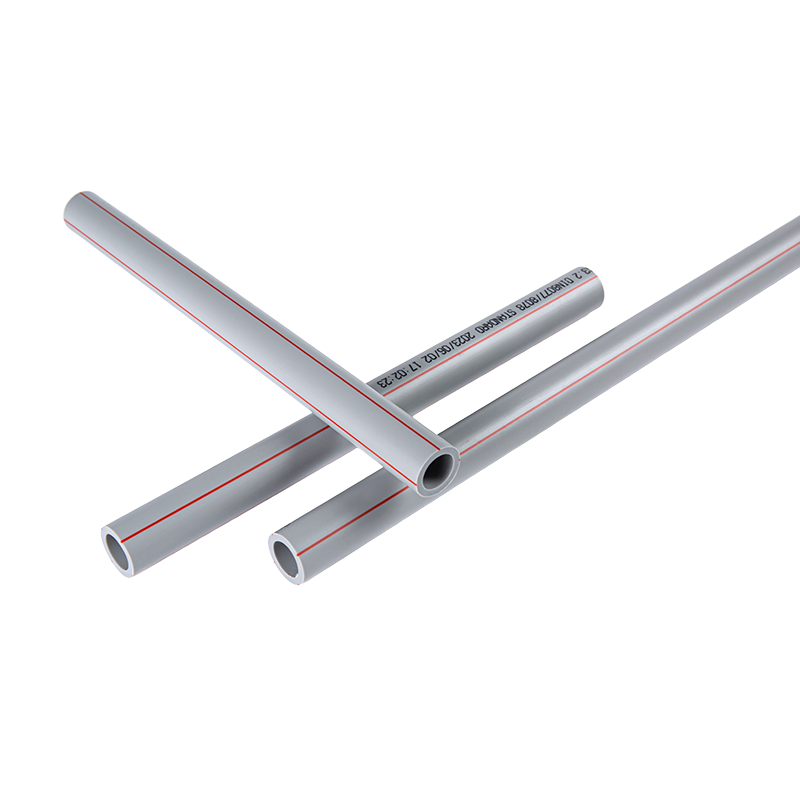 PP-RCT Pipe and Fittings for Higher-Temperature WaterAn advanced polypropylene piping option for hot-water systems needing more temperature and pressure headroom, with fusion joints and sizes up to 160 mm.View Product →
Where temperature and pressure both run higher, PP-RCT is the next step up: the same installation logic, with more headroom in the wall. The wider family of PP-R pipe for high-temperature water covers most of the hot-water duty we see in buildings, from risers to distribution branches.
Below that, PE-RT is a familiar name in floor heating circuits, and HDPE remains the default for cold water transmission, drainage and buried mains where toughness matters more than heat resistance. Mixing materials deliberately — rather than stretching one material across every duty — is almost always the cheapest decision over the life of a system.
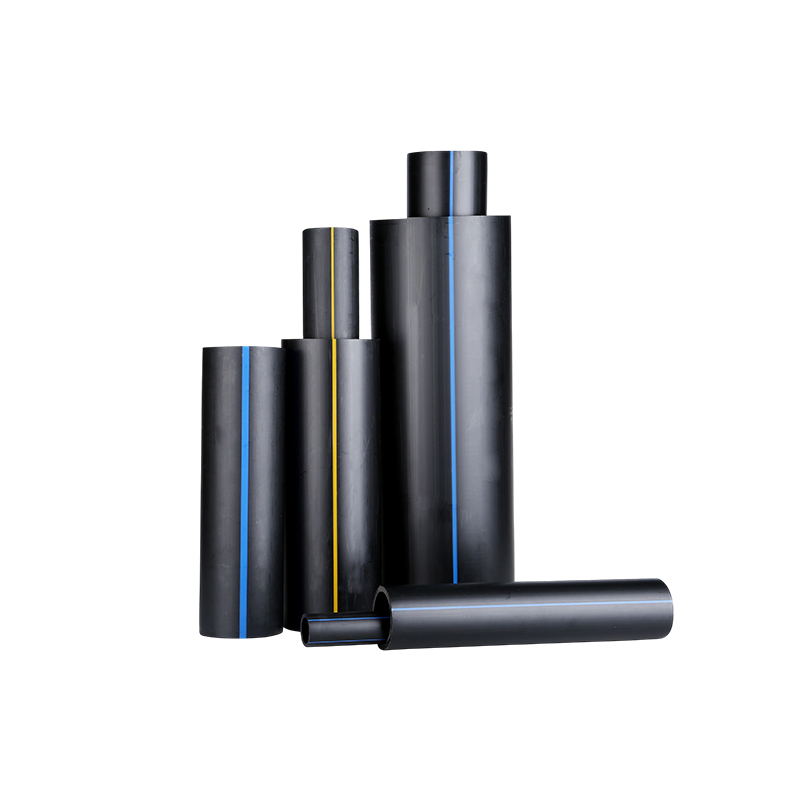 HDPE Water Supply Pipe for Durable Buried MainsA corrosion-resistant PE100 pipe for potable and non-potable water transmission, available up to 1200 mm and suited to buried or trenchless installation.View Product →
A Quick Checksheet Before You Specify
- Write down the real continuous operating temperature, not just the highest number anyone has seen.
- Pair that temperature with the working pressure; a rating without pressure tells you very little.
- Decide whether the hot condition is continuous, cyclic, or a rare excursion.
- Check how the run is supported and where expansion movement will actually go.
- Confirm the derating factor against the specific product data sheet rather than a generic table.
- If the numbers sit near the ceiling, compare materials before comparing pipe schedules.
None of this is complicated once the pieces are separated: a baseline at 73°F, a derating curve that falls with heat, and a practical ceiling that depends on whether the line is pressurised. Get those three straight and the question stops being “can PVC take it” and becomes “is PVC the right material here” — which is a far more useful thing to know before the pipe is on site.

-
 No. 61, Jian-an Road, Xingta Industrial Park, Jinshan District, Shanghai, China.
-
 judy@zhsu.com
-
 +86-15728041804
Copyright © Shanghai Zhongsu Pipe Co., Ltd. All rights reserved. PPR Pipe and PPR Fittings Solutions PPR Piping Manufacturer in China
